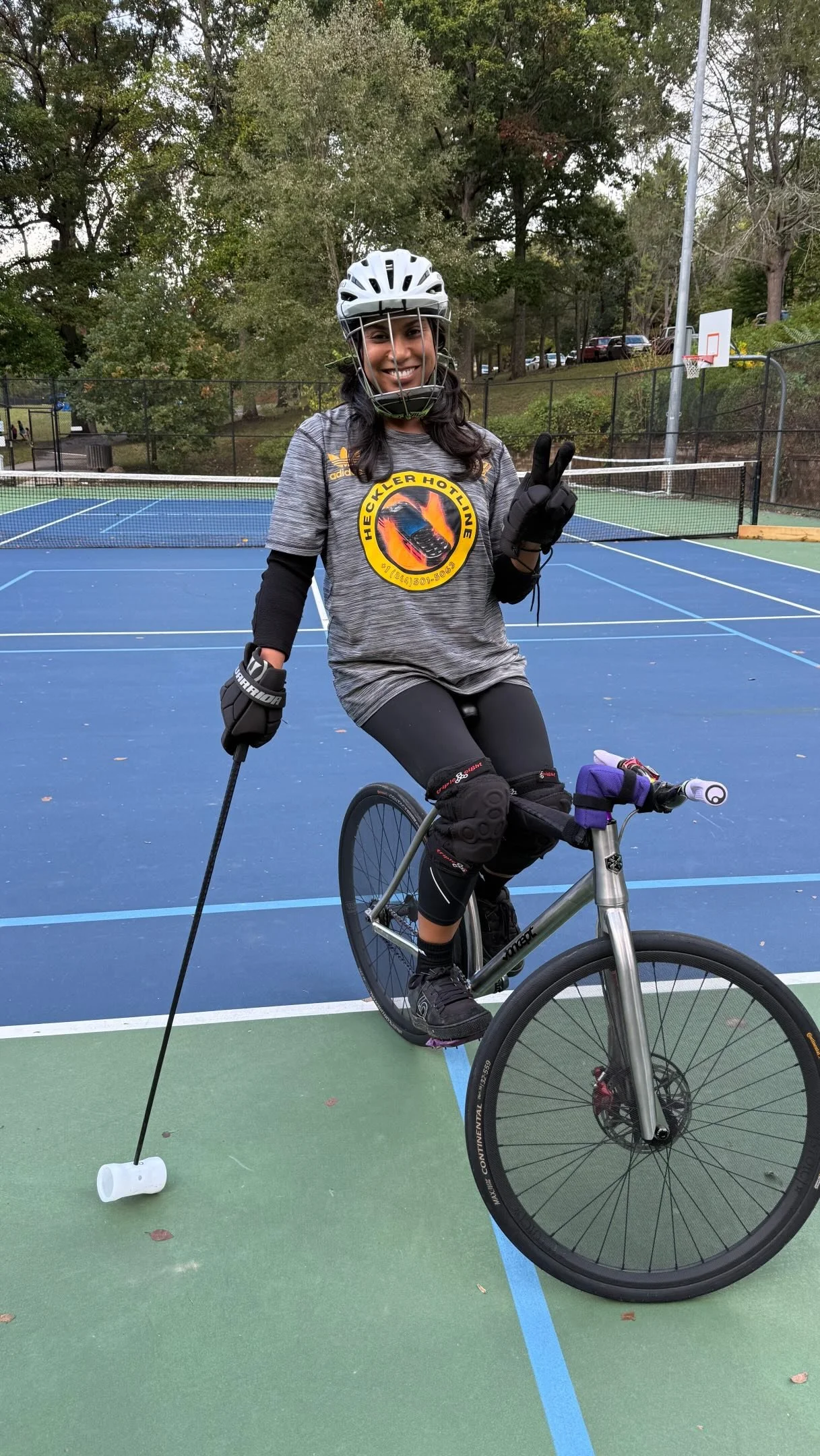
Teamwork: Playing as Three
Bike polo teamwork means learning to play as a unit instead of three people chasing the ball separately. You can have three excellent players on a team and still struggle against a team with better communication, positioning, and trust.
At GVL pickup, teams come out of the Big Toss, so you might be playing with someone you met ten minutes ago. That's part of the fun, and it's why June's skill focus is teamwork. Knowing how to fit in with whoever's on your side makes every game better, for you and for them.
The fundamentals
In hardcourt bike polo, teamwork happens through your mallet, your bike, your positioning, your decisions, and all the small things you do to make life easier for your teammates.
Knowing your role
Not everyone should chase the ball. One player might pressure the opponent with the ball, another might cover a passing lane, and the third might protect the goal or get ready for a pass. Those roles shift constantly as the play develops.
On defense, we usually set up in what we call the 3-2-1 Defense. The 3 is the goalie. The 2 sits in front of the crease, a little off to one side, and stays in our own half. The 1 pressures the ball carrier from the inside to force a rushed shot or pass. It's basic sports strategy, and it works because everyone knows what the other two are doing.
Good teamwork means noticing what your team needs right now, rather than following the ball wherever it goes. If you're unsure where to be, ask your teammates. Someone will tell you.
Passing instead of forcing the play
Passing gives your team more options than forcing your way through everyone. A teammate who moves into open space, opens a passing lane, or draws a defender away can create a chance without ever touching the ball.
Goals are hard to come by, and a one-on-one against a goalie is close to a coin flip, so a pass that pulls the defense out of position can be worth more than a rushed shot. When there's no good pass or shot, send it home. Passing back to your own half or to your goalie resets the play and gives everyone a second to get organized.
Sometimes the best thing you can do is become the person your teammate can pass to.
Covering for each other
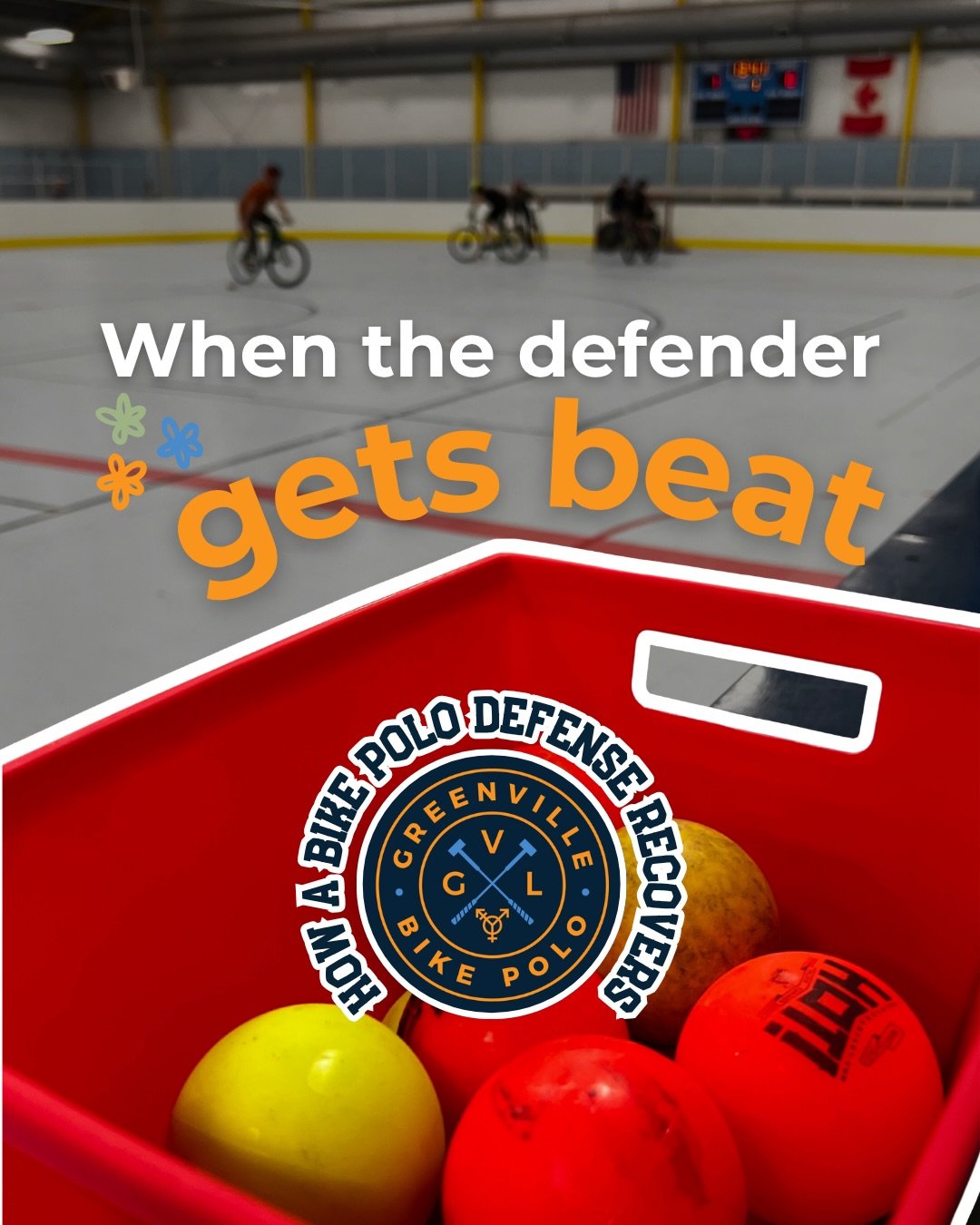
When a teammate commits to a challenge, someone else needs to account for the space they leave behind. If a player gets beat, a teammate can step in to slow the attack while the first player recovers.
This is called covering or rotating. In our 3-2-1, if the 1 gets beat or the ball gets passed, the 2 steps up to pressure and the 1 drops back into the 2 position. When we lose the ball, whoever can get into goal most easily takes goal. The point is to avoid leaving the goal open because everyone chased the ball.
Communicating on the court
Communication doesn't have to be complicated. Short calls like "one on," "you've got time," "I'm back," "left," "switch," and "home" tell a teammate what they can't easily see while they're watching the ball.
Learning to read each other's movements matters just as much. The more you play with someone, the less you have to say out loud. With someone new, a quick conversation about communication before the game helps a lot.
Trusting your teammates
Trust means believing someone else can handle the ball, take a shot, defend a player, or recover from a mistake. It also means holding your own position instead of abandoning it because you're worried your teammate might lose the ball.
A team that trusts each other makes quicker decisions and plays with more confidence.
What teamwork looks like in actual play
Here are a few common situations and what good teamwork looks like in each one:
Your teammate has the ball - You move into open space and give them a passing option.
Your teammate is under pressure - You create an outlet pass or pull a defender away.
An opponent gets past you - You call it out so a teammate can take over and you head home.
Your team loses the ball - You switch to defense right away.
Your teammate chases the ball you are - You call “mine” or back off and fill the open spot.
A teammate makes a mistake - You adjust to help them recover instead of getting frustrated.
You have the ball but no good shot - You keep it moving or send it home to reset.
Playing with new teammates
Pickup mixes everyone together, so some games you'll be the newest player on your team and some games you'll be the most experienced. Both are good chances to practice.
If you're new, tell your teammates. They can give you pointers, call out what's happening around you, and set up easy passes. Make sure to thank them for their insight.
If you've been playing a while, give newer teammates something specific to do. Pass to them gently when it makes sense. After the game, mention something they did well. Someone who touched the ball and heard a kind word is a lot more likely to come back next week.
How to get better at teamwork
You don't need elaborate drills or a coach to start improving. Try these habits at your next pickup game:
Look before you chase. Before committing to the ball, notice where your teammates and opponents are.
Say what you see. Call out useful information a teammate might not have.
Review one play afterward. Ask yourself what you could have done to support your teammates, even if that play ended in a goal against you.
If you want a little more structure, pick one of these for a game or two:
Pass-first game. For one game, pass at least once before you shoot, even if you have an open look. Afterward, notice how it changed the flow.
Name your numbers. Before the game, agree on who starts at 1, 2, and 3. After each turnover, check that all three spots are filled, even if different people are in them.
Shoutouts. At the end of the session, tell one teammate something you noticed them do well. Try it with someone you don't usually play with.
Teamwork off the court
Bike polo is a community-driven sport, and teamwork reaches past the three people in a particular game.
Help newer players learn. Explain a call, offer a tip, or help someone figure out where to position themselves.
Support from the sidelines. Cheer for people, keep time, lend a mallet, run the big toss for the next game rotation, or help keep things moving.
Give useful feedback. Talk about what happened without turning every mistake into a criticism.
Share the work. Help set up and take care of the court, put equipment away, and make sure people feel included.
Celebrate the small wins. A good defensive rotation or an unselfish pass counts as much as a goal.
Playing together
Good teamwork doesn't require everyone to think alike. You’ve built enough awareness and trust to make different decisions that still work together.
The best sign of it? Your teammates have more options because you're on the court, even when you aren't the one touching the ball.
Come play with us
We play Tuesday evenings and Saturday afternoons at Gateway Park in Travelers Rest, and Sunday afternoons at Malvern Hills Park with AVL Bike Polo.


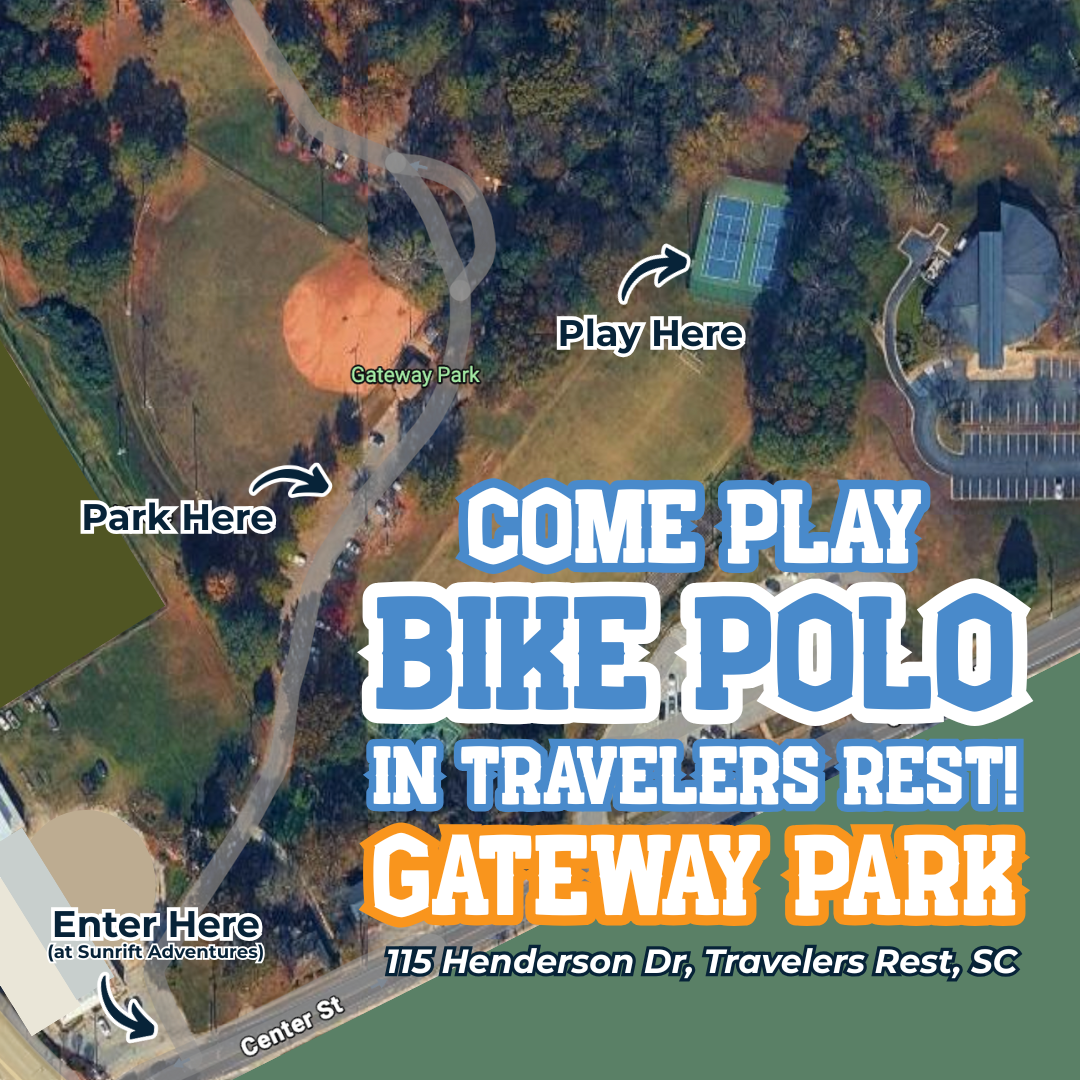
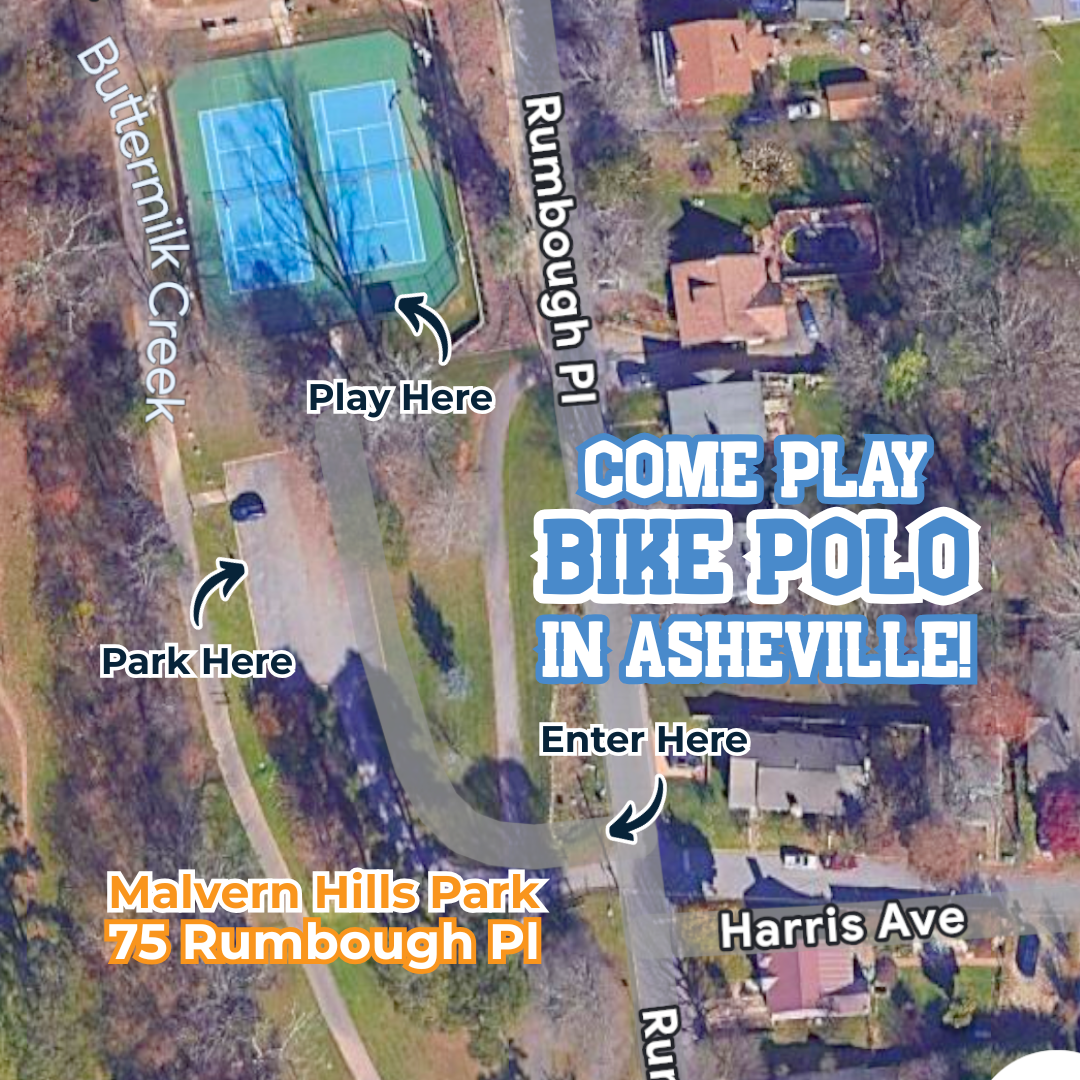

Loaner gear is available, and no one expects you to know any of this on your first day. Follow @GVLBikePolo on Instagram for updates.