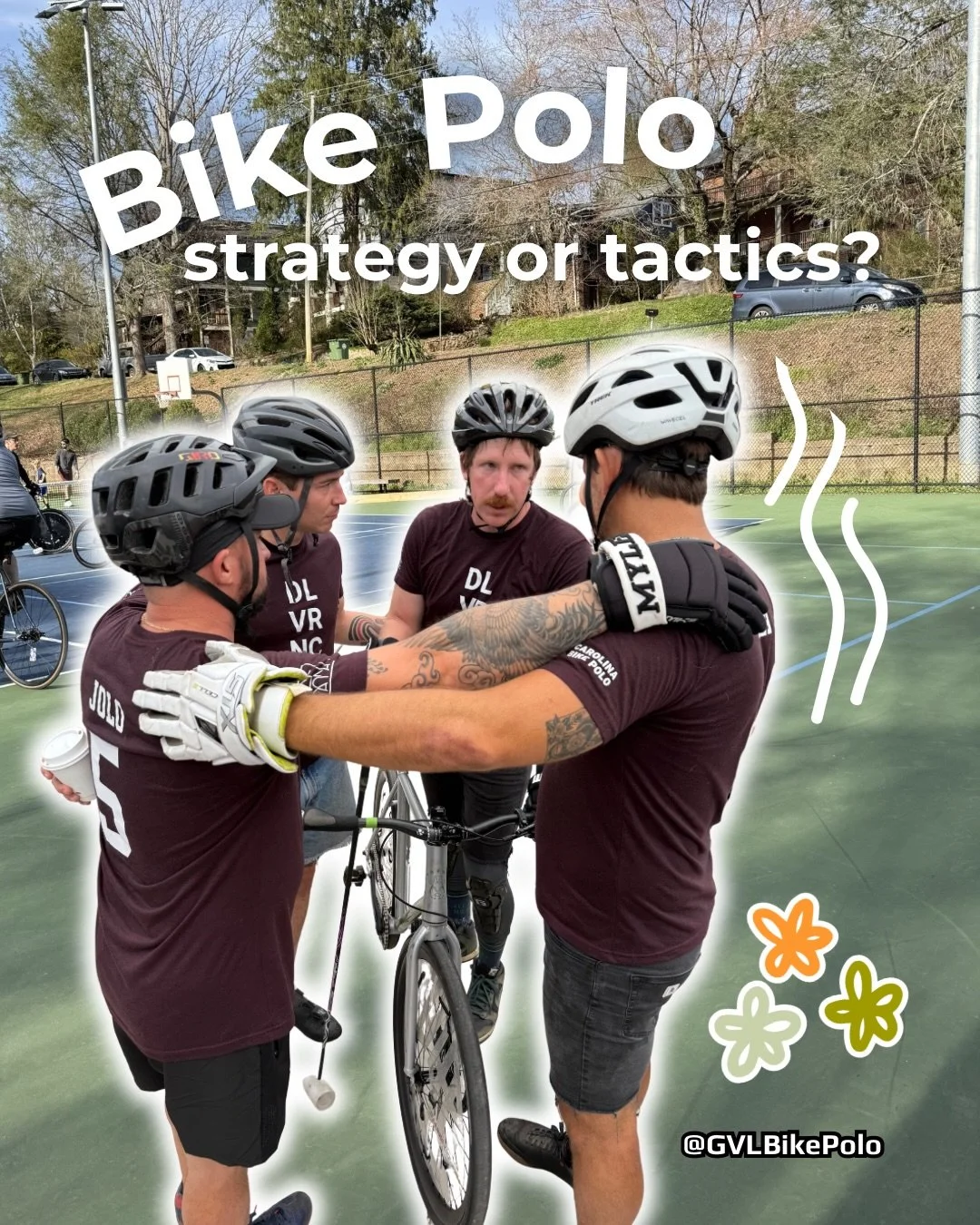
The 3-2-1: How GVL Defends
All October on Instagram, we're walking through how GVL plays: how we set up on defense, the plan behind our game, and how we handle the last two minutes of a close game. This post is the starting point. It covers the defensive setup we use every time the other team has the ball, and the numbers we use to talk about it.
If you're new to bike polo, you don't need any of this to show up and play. You'll pick most of it up just by being on court. But if you've ever finished a point wondering where you were supposed to be, this should help.
The 3-2-1 defense
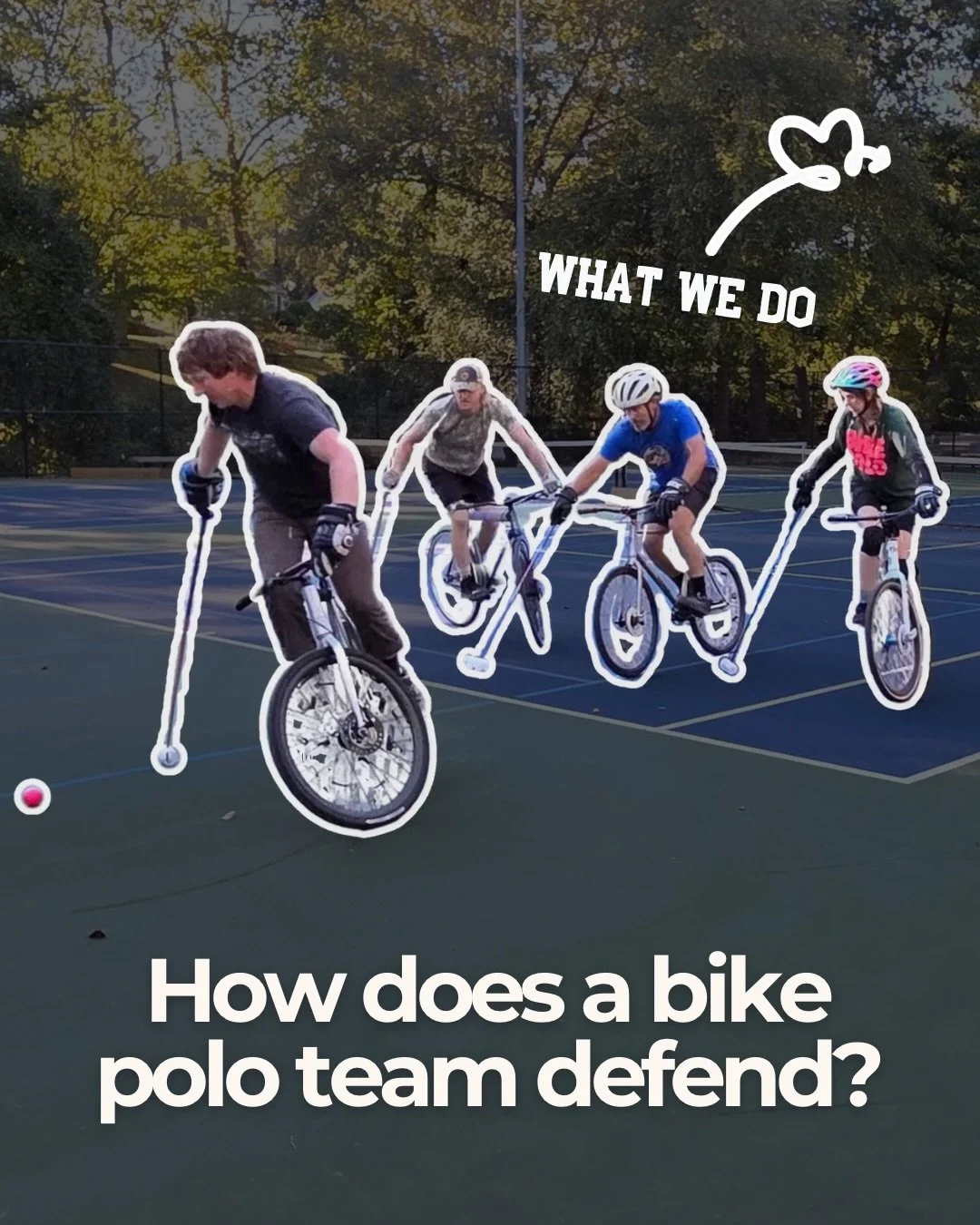
Our defensive setup has three roles, numbered by how close each player is to the goal. The 3 is in goal, the 2 is the next line of defense, and the 1 is out front pressuring the ball.
3 is the goalie
The goalie sets up in goal whenever the other team has the ball. At pickup, we don't draw a crease, so you'll be working from an imaginary area where everyone agrees it probably is.
The goalie has the best view on court. You can see the whole play from the goal, including things your teammates can't see because they're in the middle of the play. Use that. Narrate the game out loud so your teammates have the full picture too: who's open, who's coming up behind them, where the carrier is heading.
2 is the next line of defense
The 2 plays around the crease, between the goalie and the ball, and stays in our own half when we don’t have possession.
Try to face the opposite direction from the player in the 1 position. If the 1 is facing left, the 2 faces right, while still staying in front of the goal. Your job is to anticipate a pass or shot. Together, you cover more of the court and are ready to react whichever way the play breaks.
1 pressures the ball carrier
The 1 is closer to half court, usually on the opposite side from the 2 or in the center. Their job is to stay on the inside, between the ball and the goal, and force the carrier to shoot or pass before they want to.
Here's the part that takes the pressure off: you don't have to win the ball. In fact, you don’t even want it. Instead, try to stay in front of the ball carrier’s wheel. This gives you more control to push them wide where shots are much harder to make and pass options are limited. If the carrier ends up taking a rushed shot from the side or is forced to make a pass, you've done your job, even if you never touched the ball.
Why it works
At every point in the play, the ball carrier has someone on them, and at least two players are between them and the goal. To score, the other team has to beat the pressure, get past the 2, and then beat the goalie. Each of those steps is a chance for us to win the ball back.
It also gives everyone a clear job. If you're new and not sure what to do, ask which number you are. That answer tells you where to be.
A note on names
Naming and numbering these positions varies from club to club. Some clubs count from the goal out, some use names instead of numbers, and some don't name them at all. This is how we call it at GVL. If you play with another club, the idea will probably look familiar even if the labels don't.
The switch
Even good pressure isn't foolproof. The carrier finds a gap, or makes a pass you couldn't reach. That's normal, and it's going to happen to every player on court, every session.
Getting beat isn't the problem. The problem is when getting beat leaves the goal open. Switching the 1 and 2 positions is how the defense recovers without that happening.
Know your cue
It's time to switch when:
The carrier gets past a defender
The carrier makes a pass
When either of those happens, the defense needs to reorganize quickly. Here's how each role handles it.
The 2 steps up. Take the pressure either on the ball carrier who just got past the 1, or by following the pass to intercept it or pressure the new carrier. Let the 1 know you've got it so they can drop back, and stay on the inside of the play so the carrier still has to go wide. This only works if you're already in position: between the goalie and the ball, facing the opposite direction from the 1, ready to step up instead of turning around first.
The 1 falls back. Once you're beat, don't chase from behind. Get between the goalie and the ball and take over the 2 spot. Chasing rarely gets the ball back. You're behind the carrier, they're moving away from you, and you're likely to get tangled with your teammate who just stepped up. Dropping back keeps two defenders between the carrier and the goal, which is the whole point of the setup.
The 3 stays home. The goalie stays in goal while the 1 and 2 trade places. You'll usually see the switch coming before anyone else does, because you're facing the play, so call it out to give your 2 a head start. Once in a while you'll have a real chance to win the ball by leaving goal. If you do, say so, so someone can fall in behind you.
When this breaks down
The switch doesn't work when:
The 2 waits to see if the 1 recovers
The 1 chases the ball from behind
The goalie leaves with no backup
Nobody communicates
Most of these come down to hesitation or silence. If you're not sure whether to switch, switch. A half-second of waiting is usually what lets the carrier through.
Trust the 2 to step up, trust the 1 to drop back, and trust the goalie to stay in net.
Where this goes next
The 3-2-1 defense looks tidy on paper. In a real game, defense breaks apart, passes get through, and the ball changes hands constantly. Our next post covers what happens then: how the 1 and 2 switch, and what everyone does right after a turnover.
Next up
The 3-2-1 is what we fall into once the other team has the ball. Our next post covers the plan behind it, the difference between strategy and tactics, and what everyone does in the few seconds after the ball changes hands.
Come play with us
We play Tuesday evenings and Saturday afternoons at Gateway Park in Travelers Rest, and Sunday afternoons at Malvern Hills Park with AVL Bike Polo.
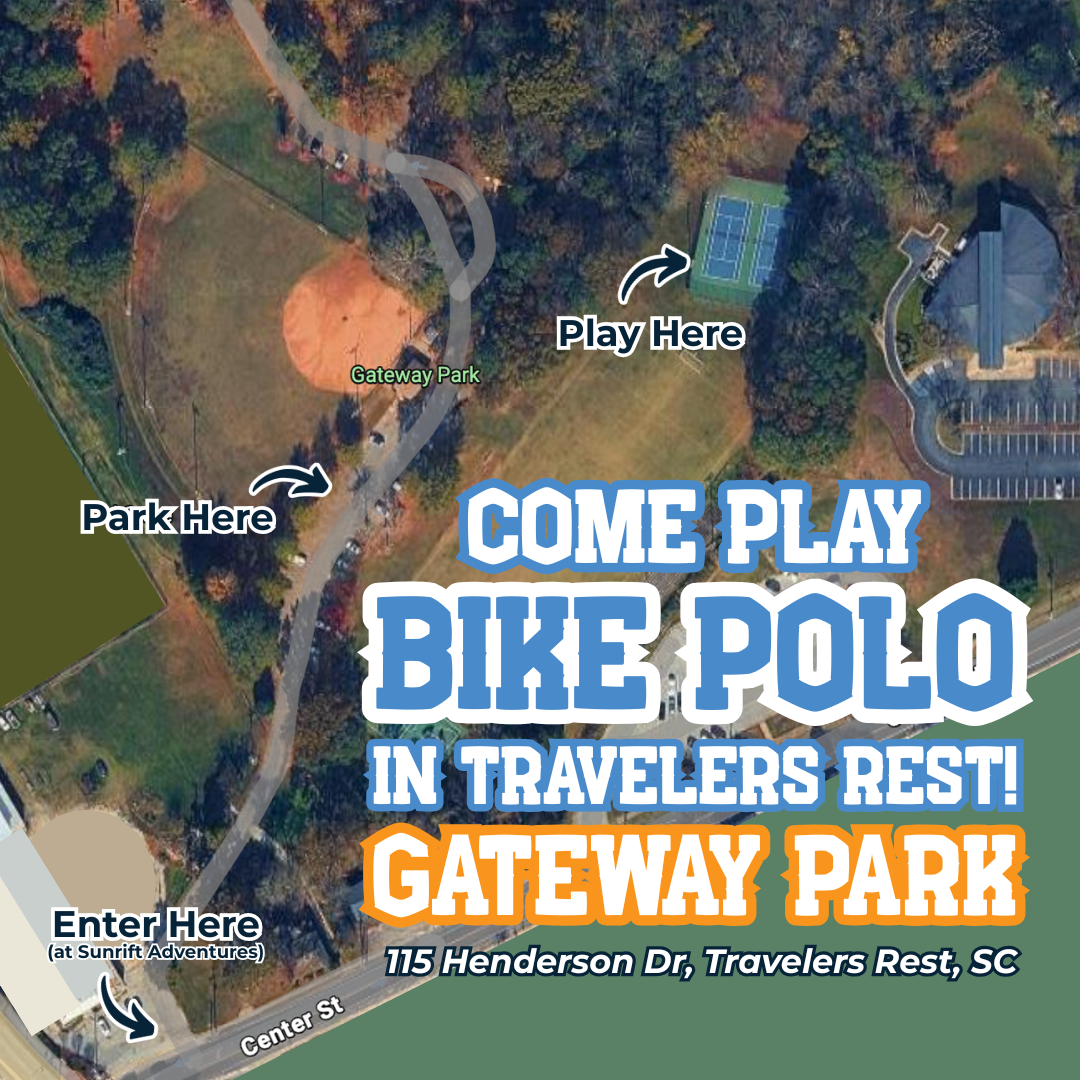
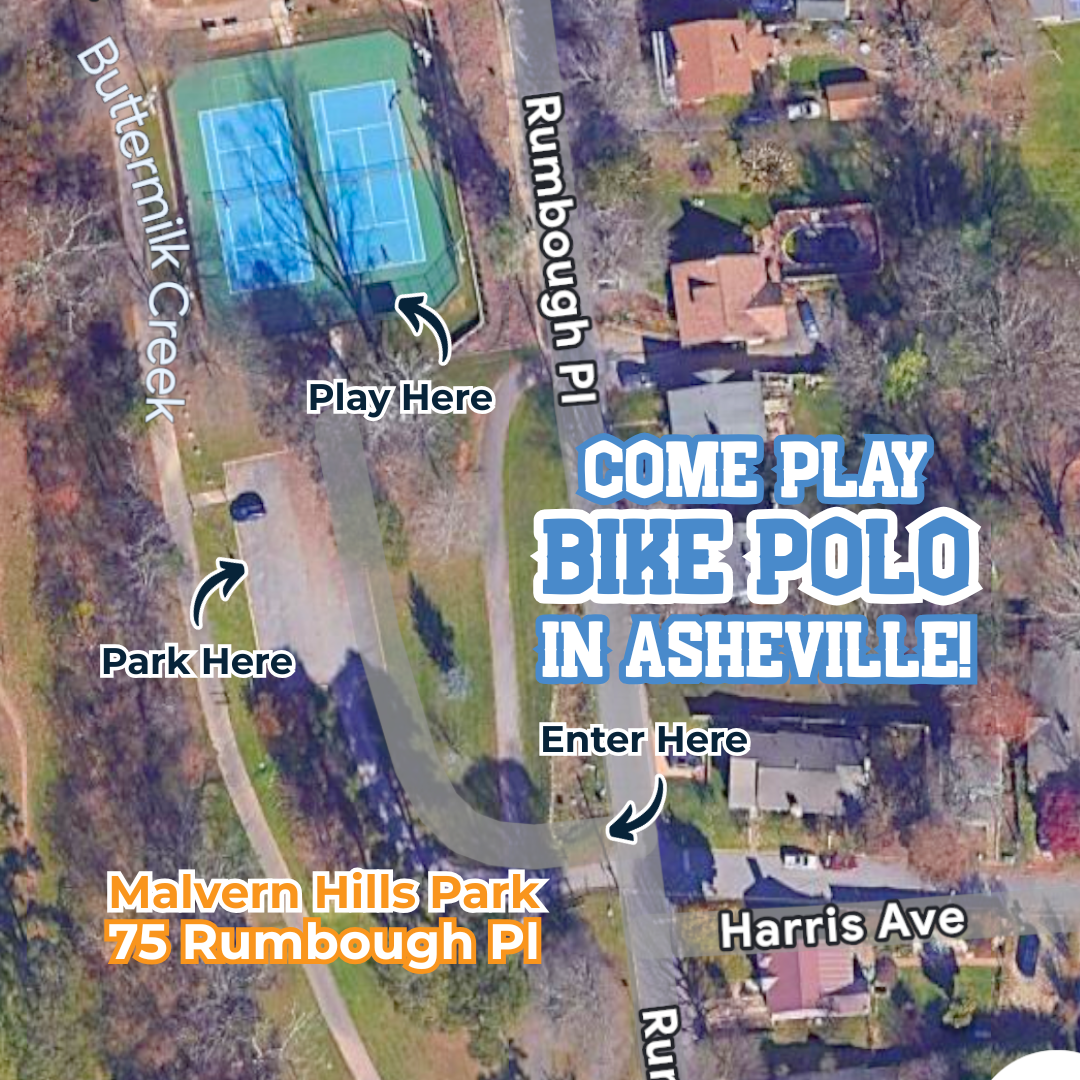


Loaner gear is available, and no one expects you to know any of this on your first day. Follow @GVLBikePolo on Instagram for updates.