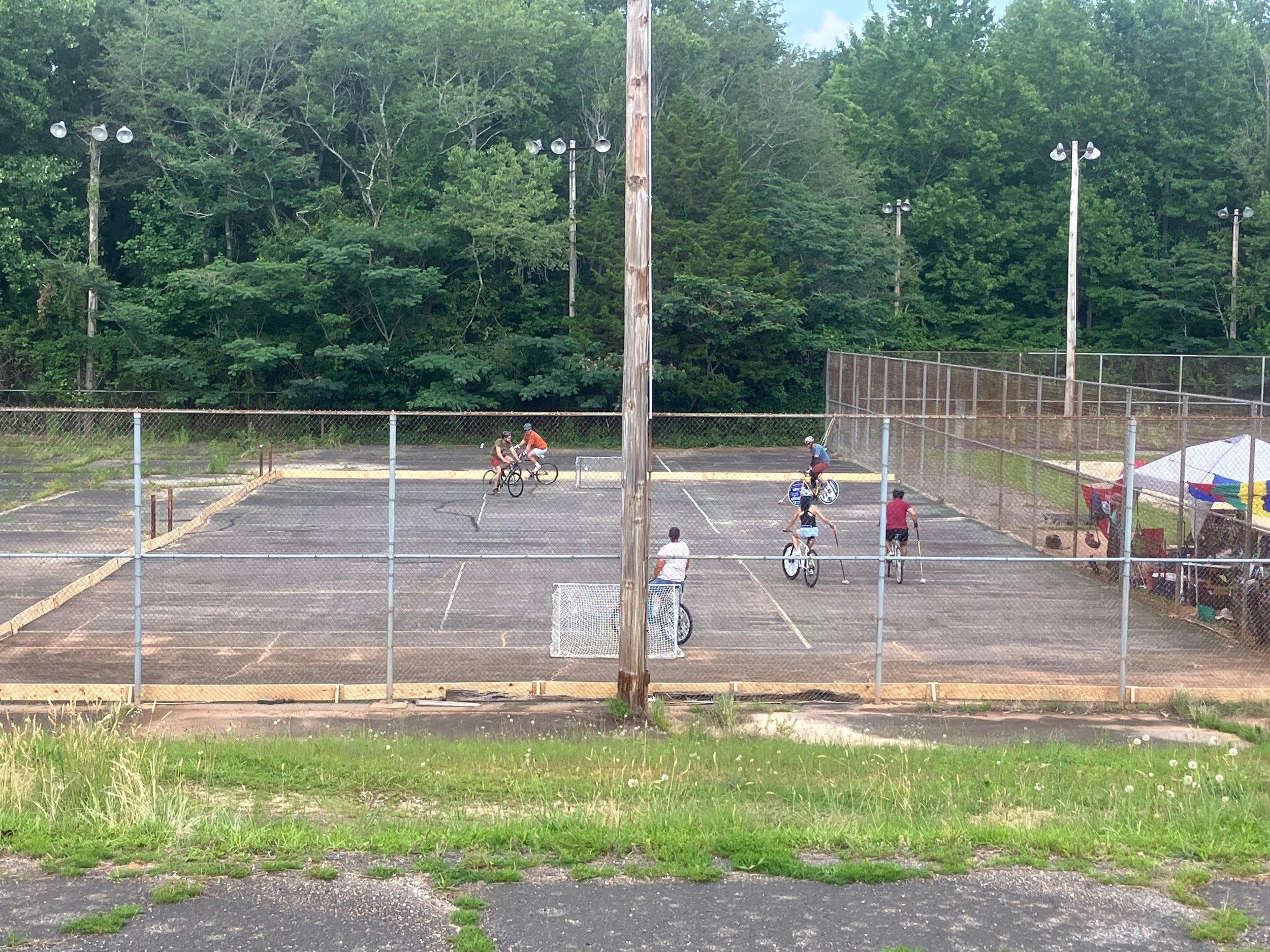
What It Took to Make Lakeside Park Playable
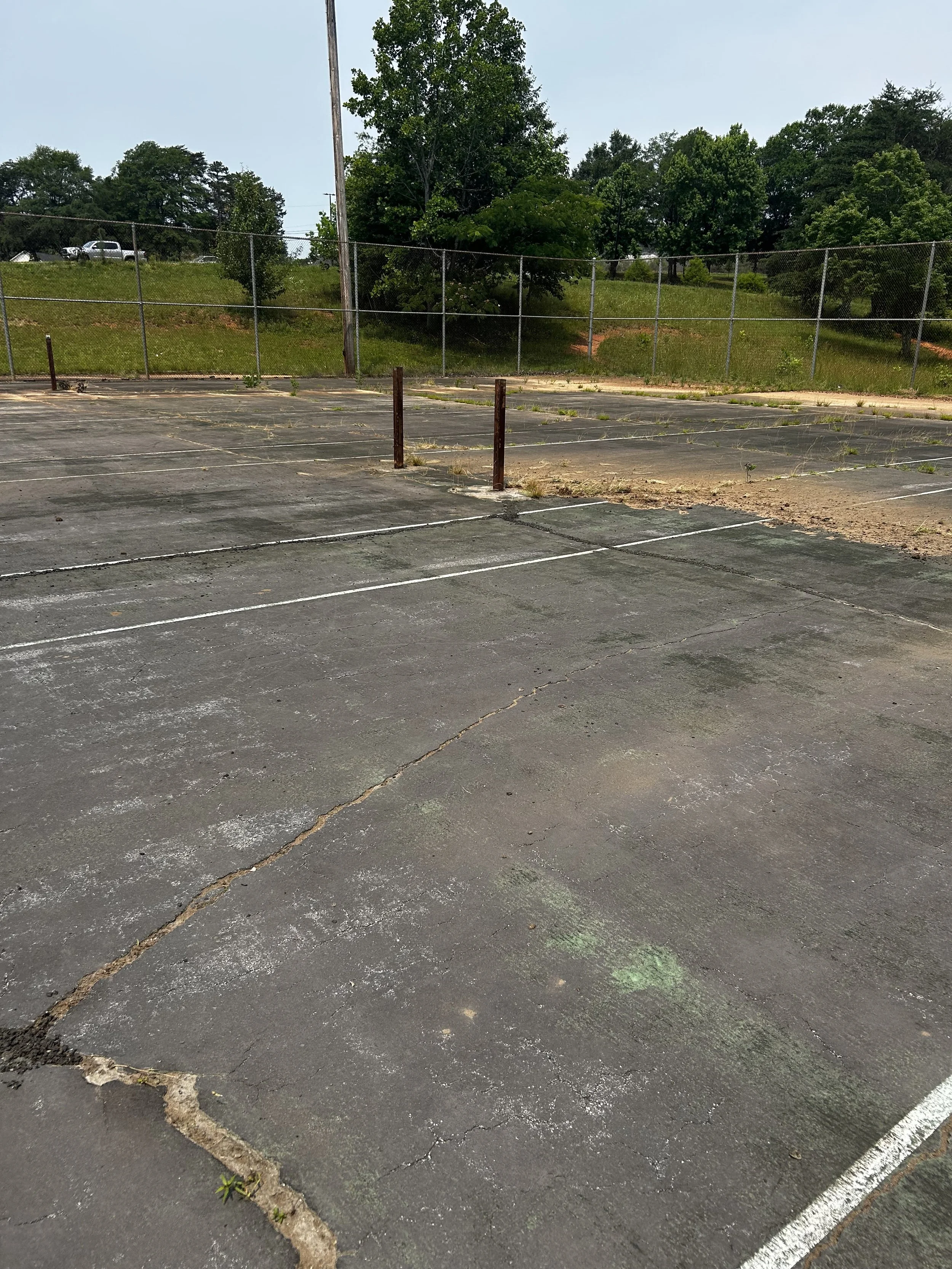
When Greenville County granted us access to Lakeside Park, we didn’t inherit a ready-made court (read about that journey here). The space had been unused for a long time, and it showed.
The court surface was cracked, and weeds had made these cracks their permanent homes. The area needed care before it could safely support bikes, mallets, and people. So we got to work.
May 31: Clearing the Space
On May 31st, a group of us met at Lakeside with gloves, tools, and a clear goal: make the space usable.
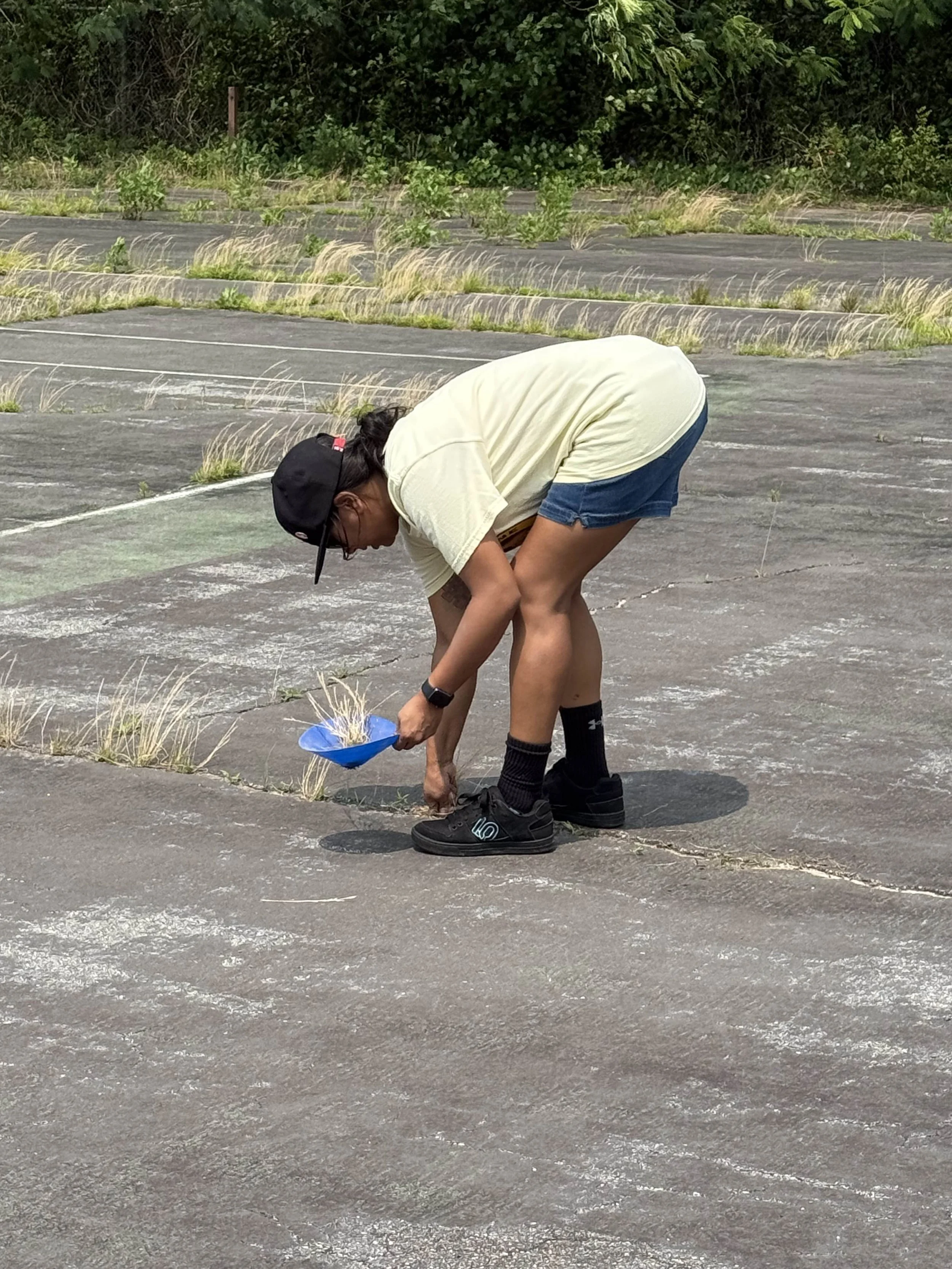
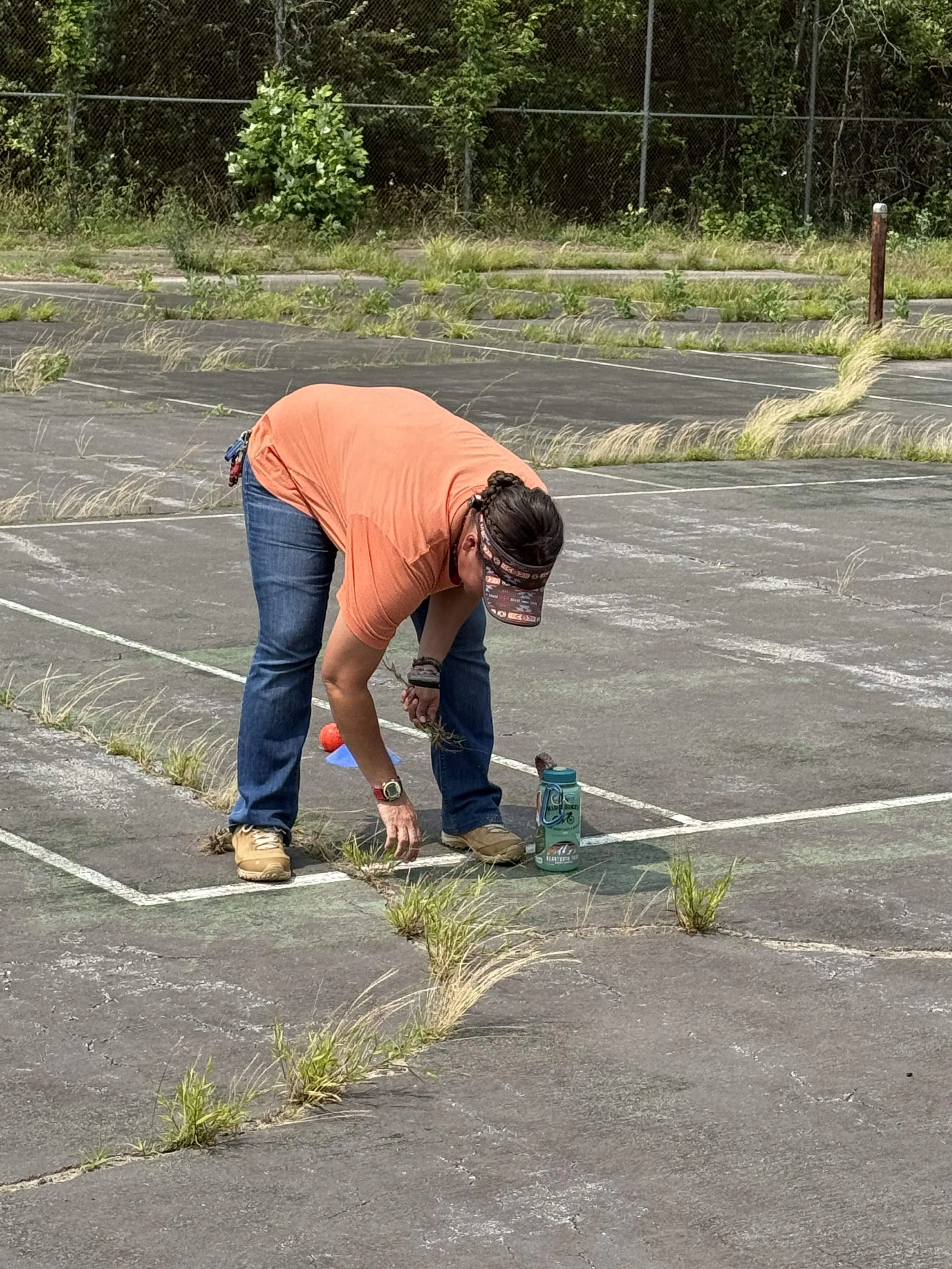
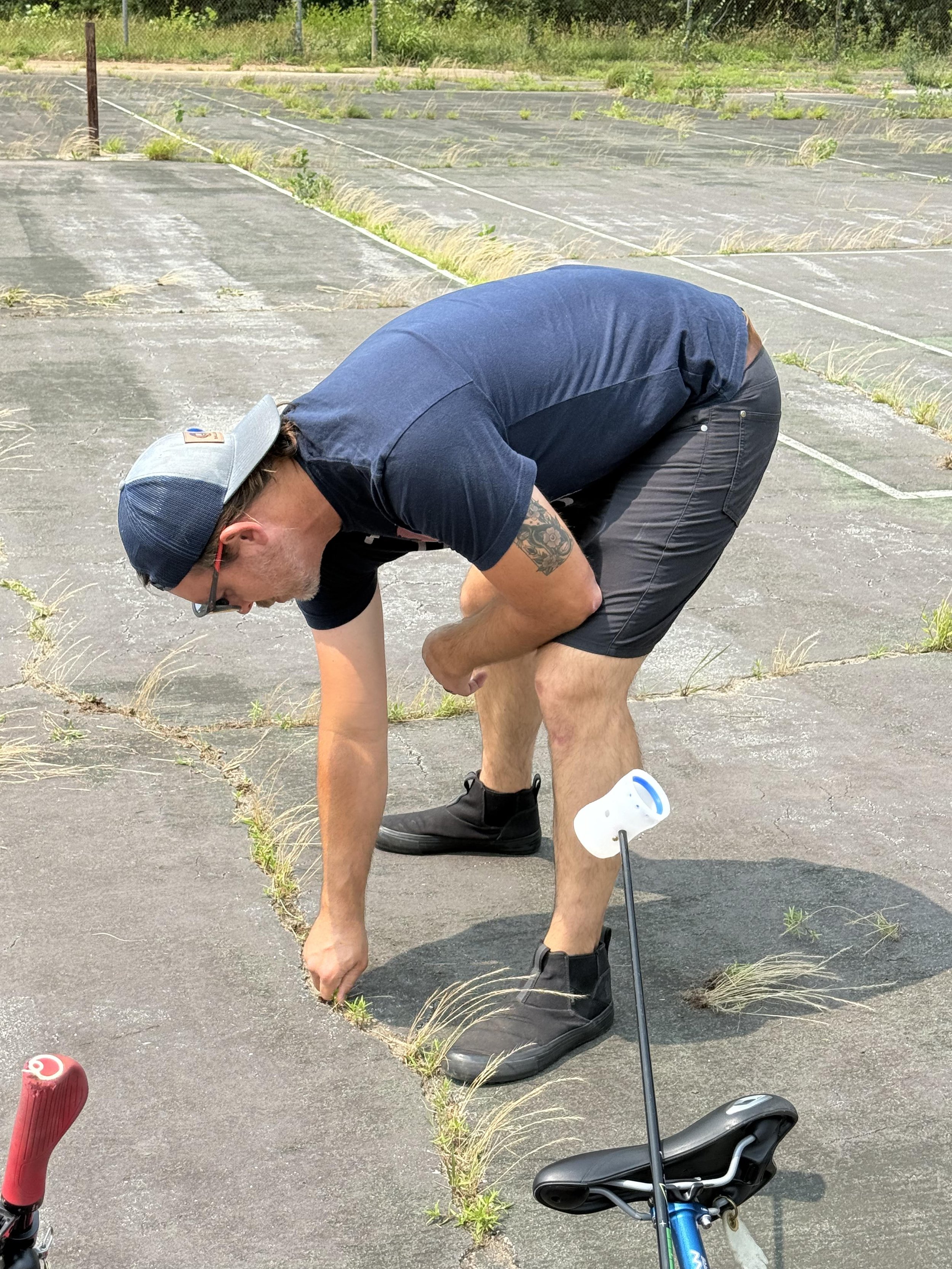
We pulled weeds by hand. Some came up easily. Others had deep roots that had been breaking the surface apart for years. Clearing them revealed just how much damage lay beneath. But by the end of the day, the court was at least visible again.
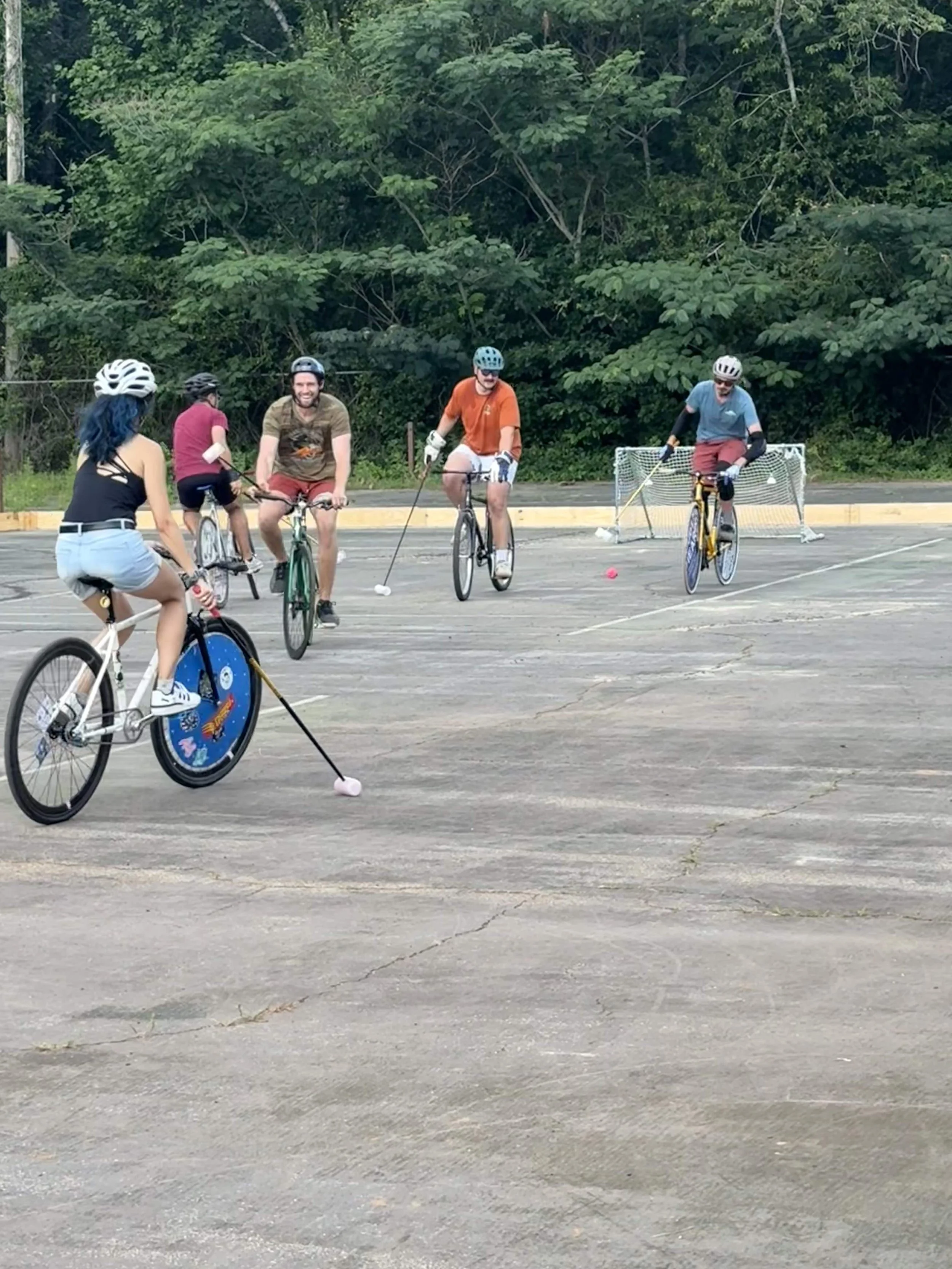
That same day, we played our first game at Lakeside. It wasn’t perfect. But it was ours.
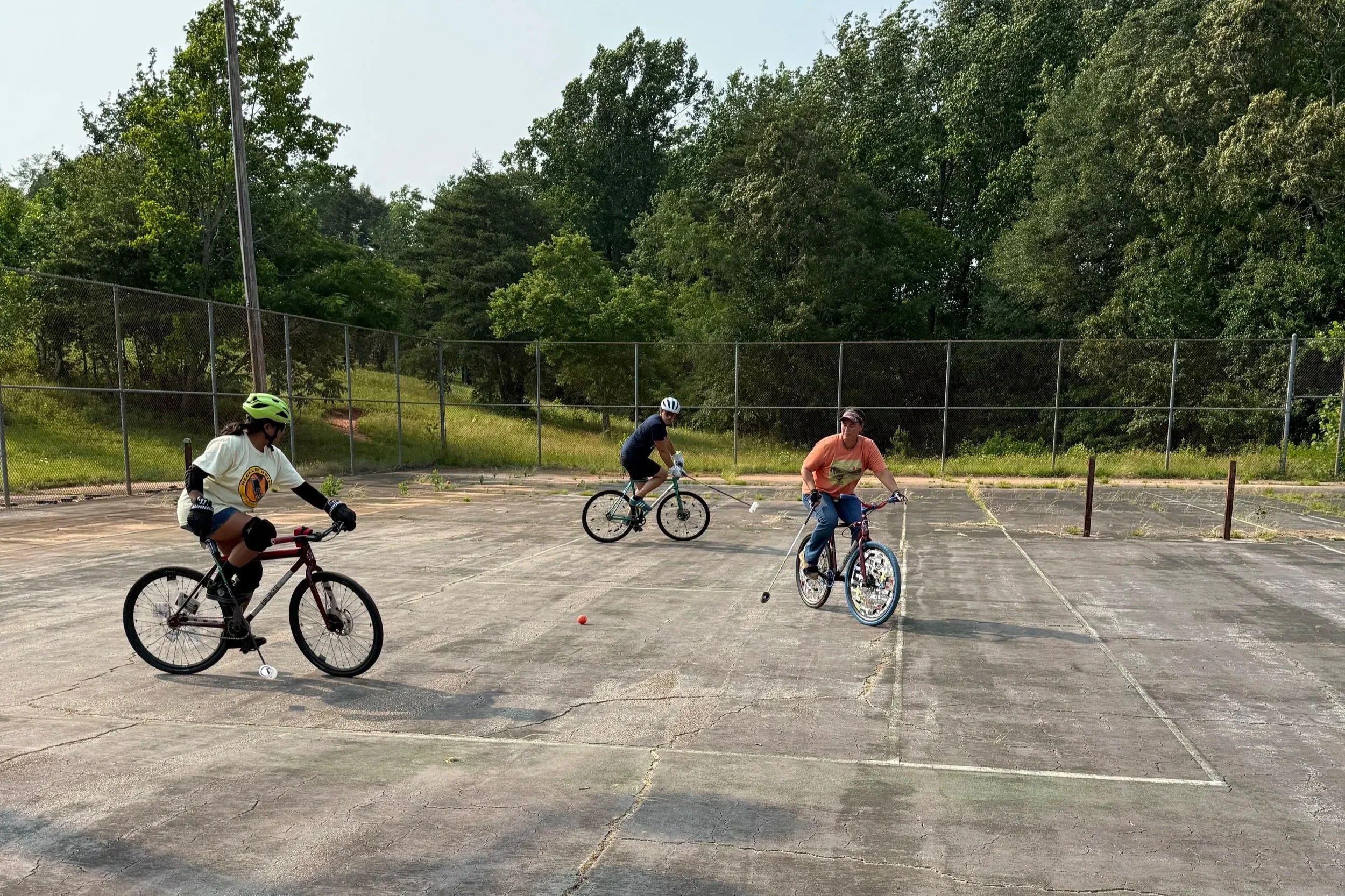
Seema, Dana, and Christi-An practicing on the newly weeded court at Lakeside
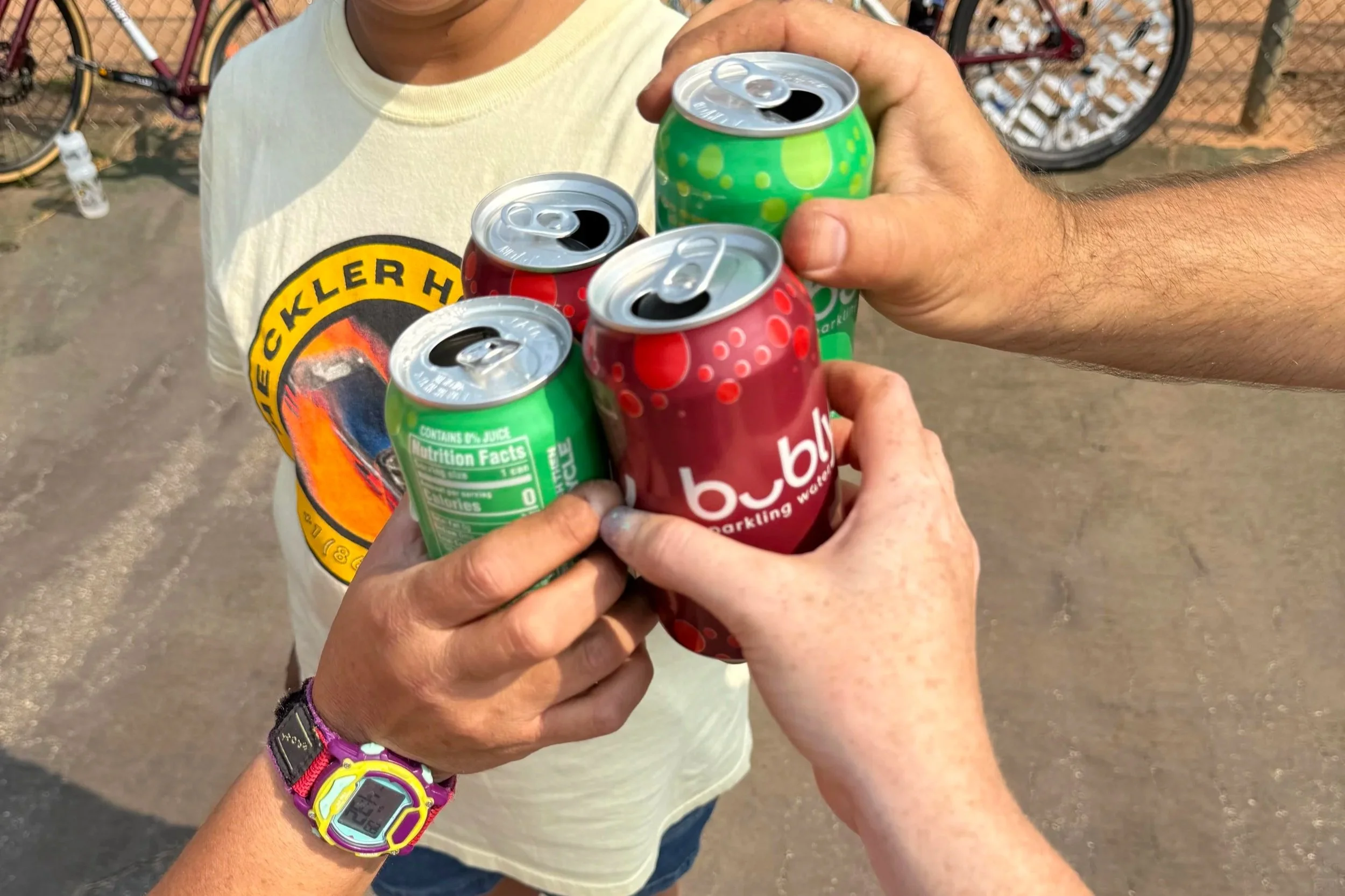
CHEERS! #notspponsored
June 1: Repairing the Cracks
The next step was addressing the damage left behind.
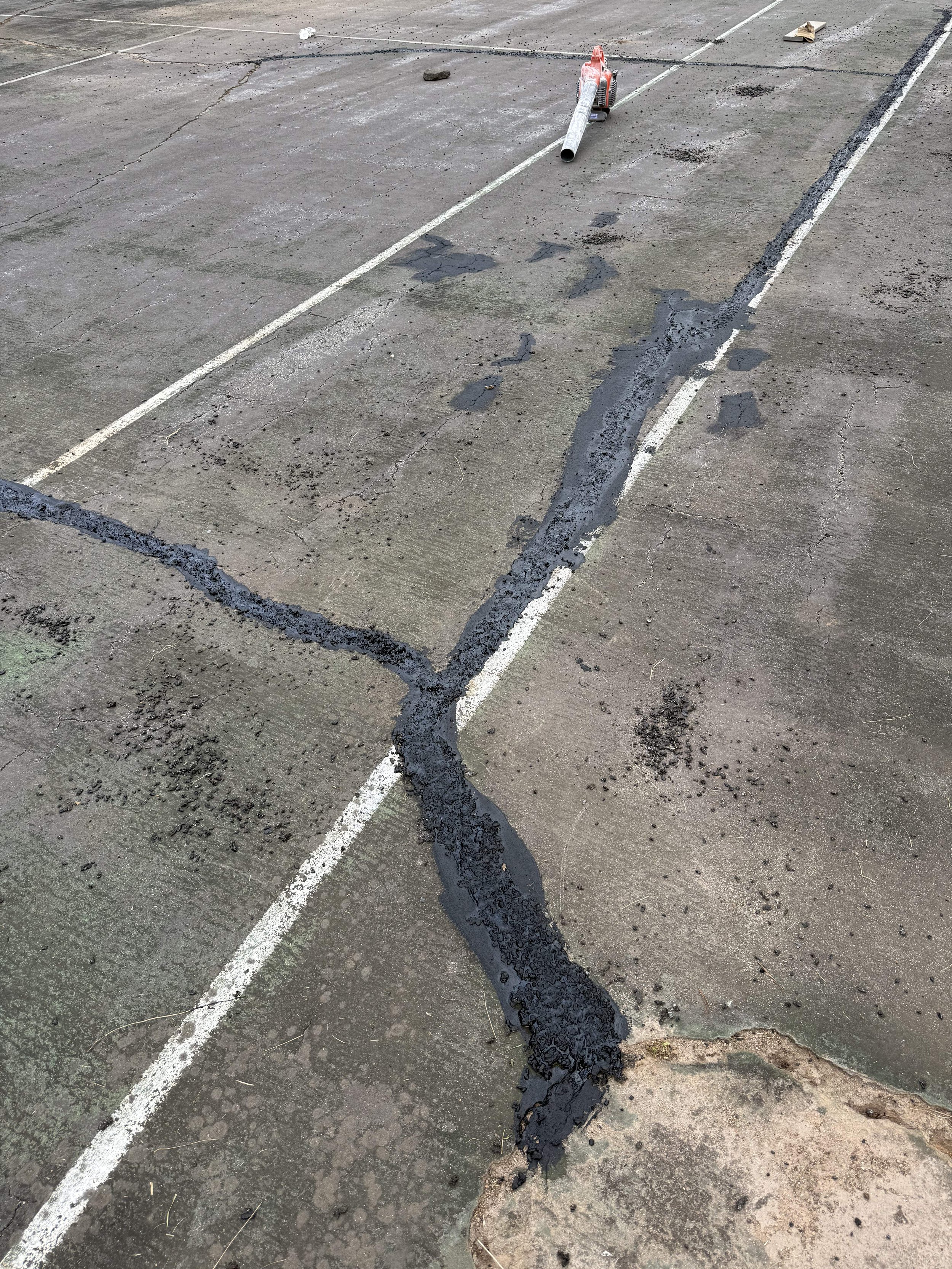
On June 1, Dana began filling cracks in the concrete. The process was slow and physical. Loose debris had to be cleared first. Then, cracks were cleaned to ensure the material would bond properly. He worked asphalt patch and tar into the gaps, packed them down, leveled them, and left them to cure.
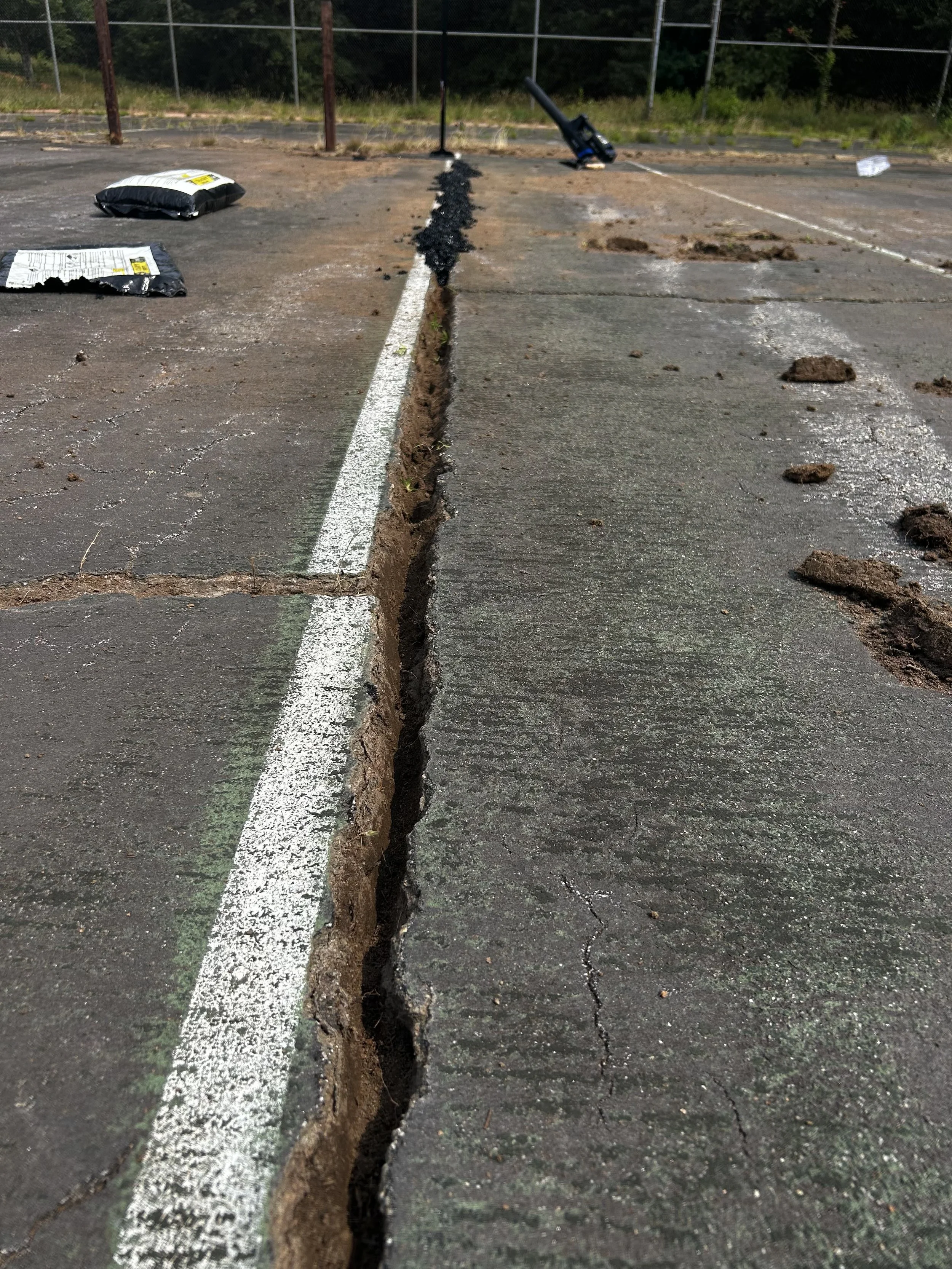
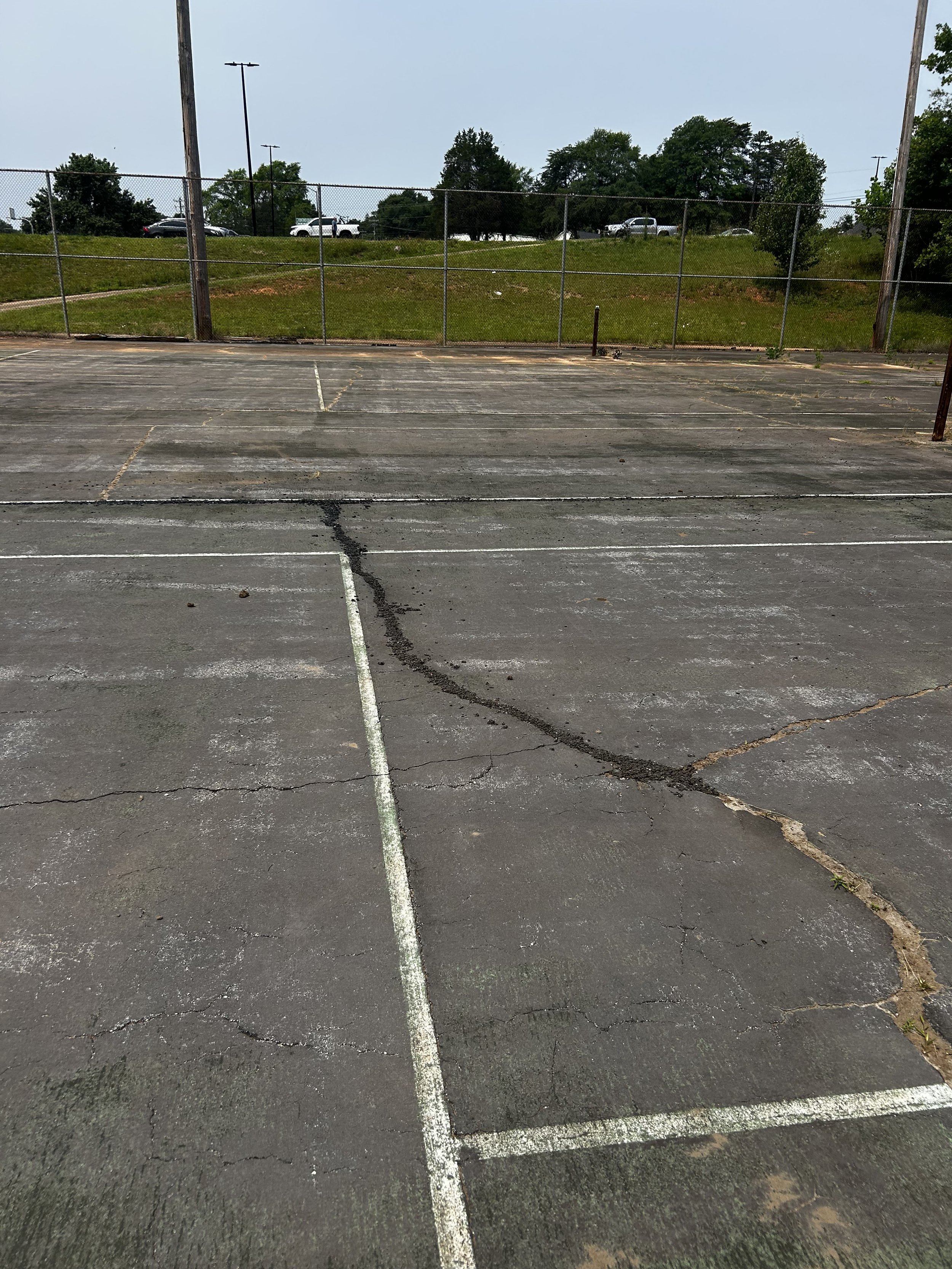
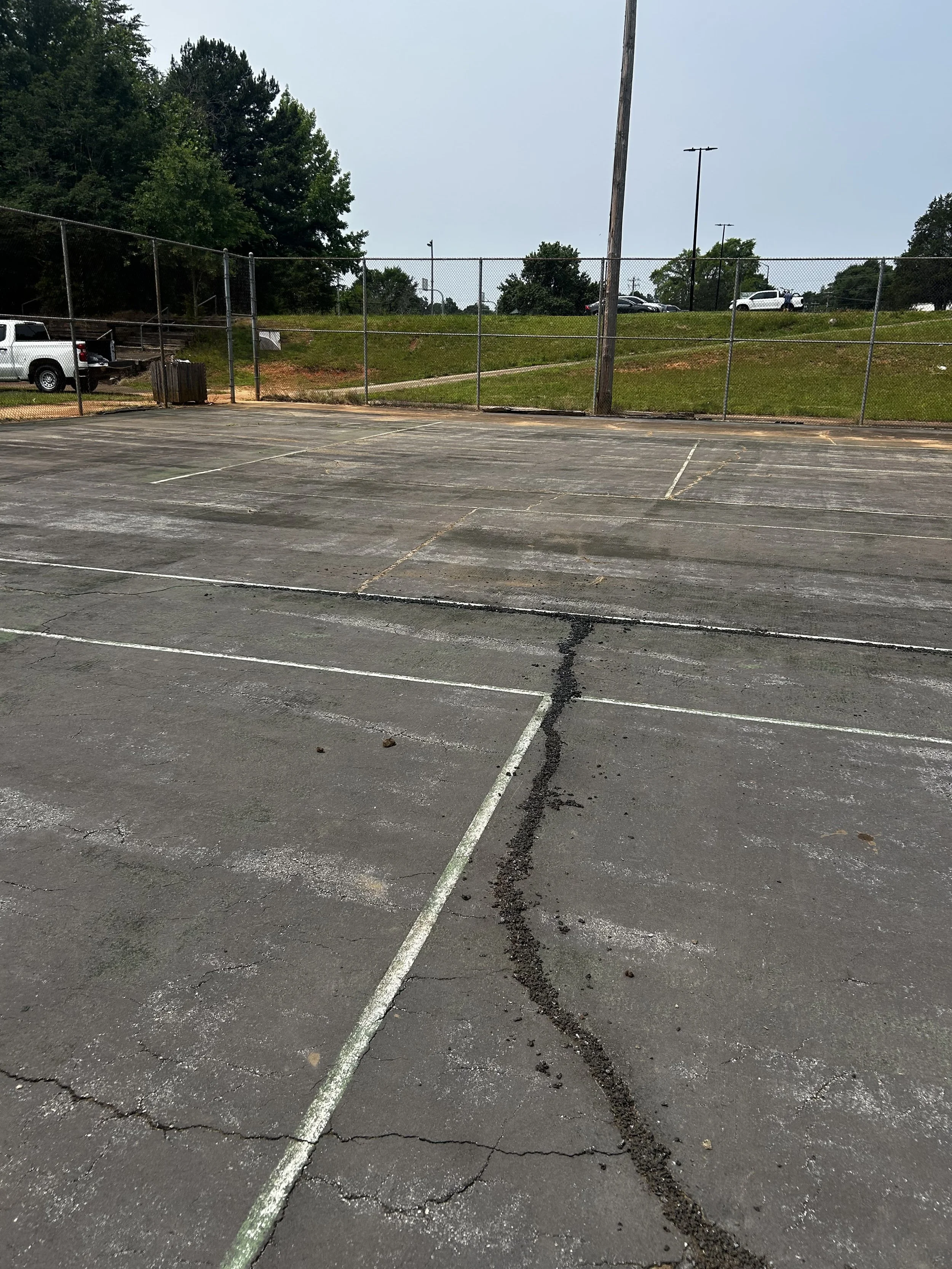
This wasn’t cosmetic work. Filling cracks reduces sharp edges, prevents further water damage, and makes the surface safer to ride on. It’s the kind of maintenance that keeps a space usable instead of letting it fall back into disrepair.
Every Weekend In June
That work didn’t happen once. It happened again and again. Each weekend in June, we came back to fill more cracks. Some were small. Some ran longer than expected. Each repair made the court more playable and more durable.
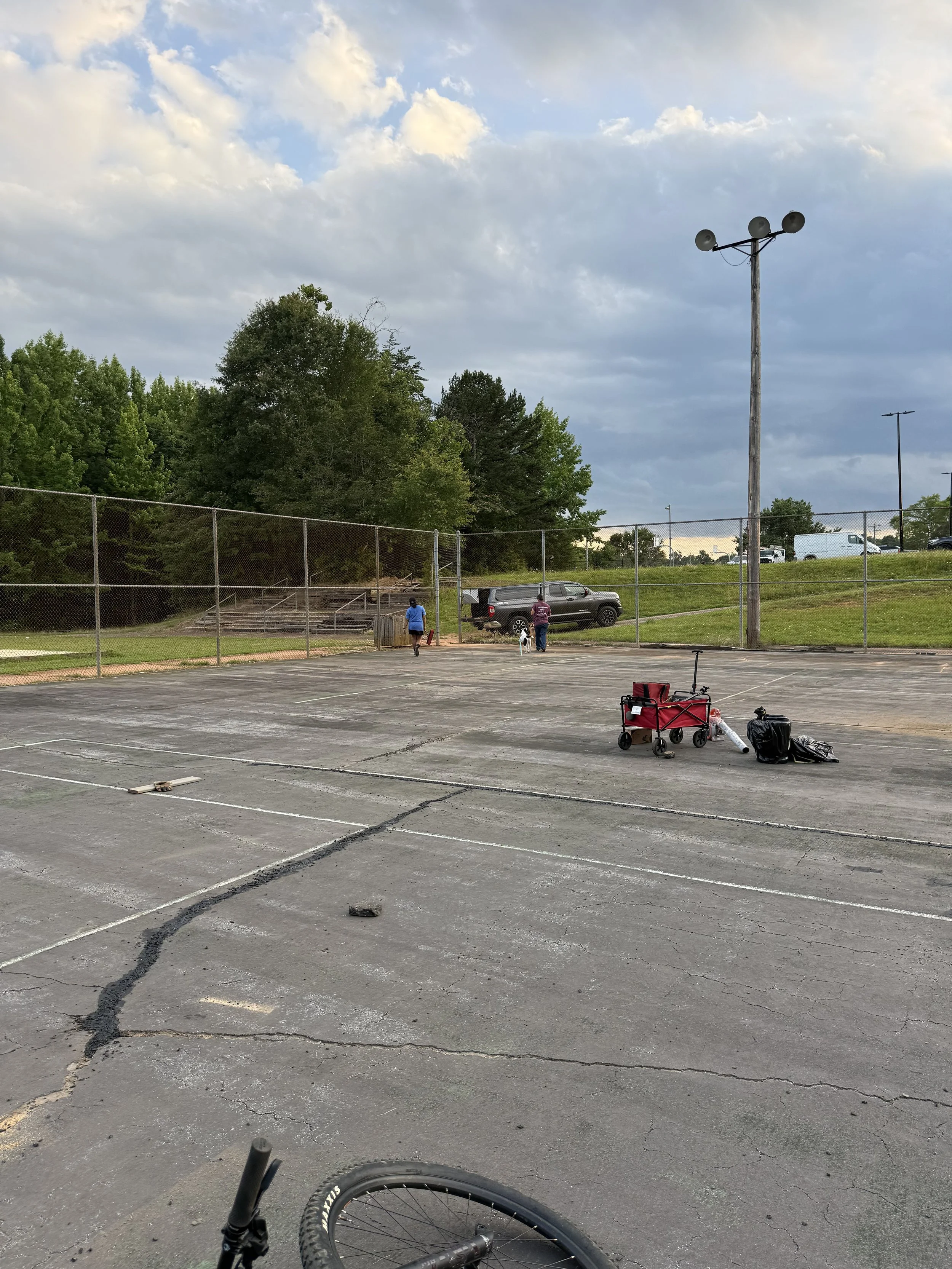
And let’s be clear, no one was paid for this work. People brought what they could: tools, materials, time, and patience, and our progress was slow and steady.
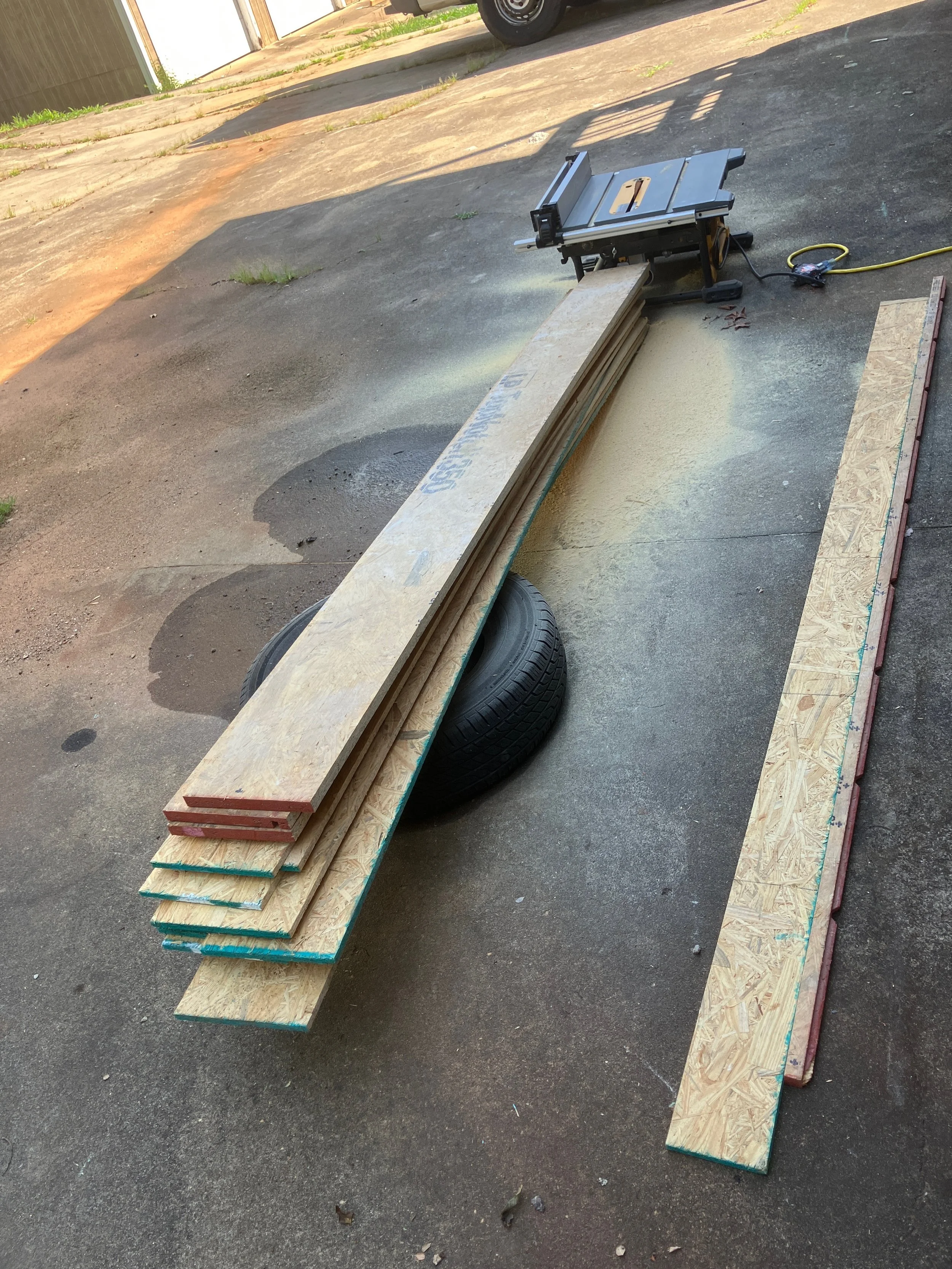
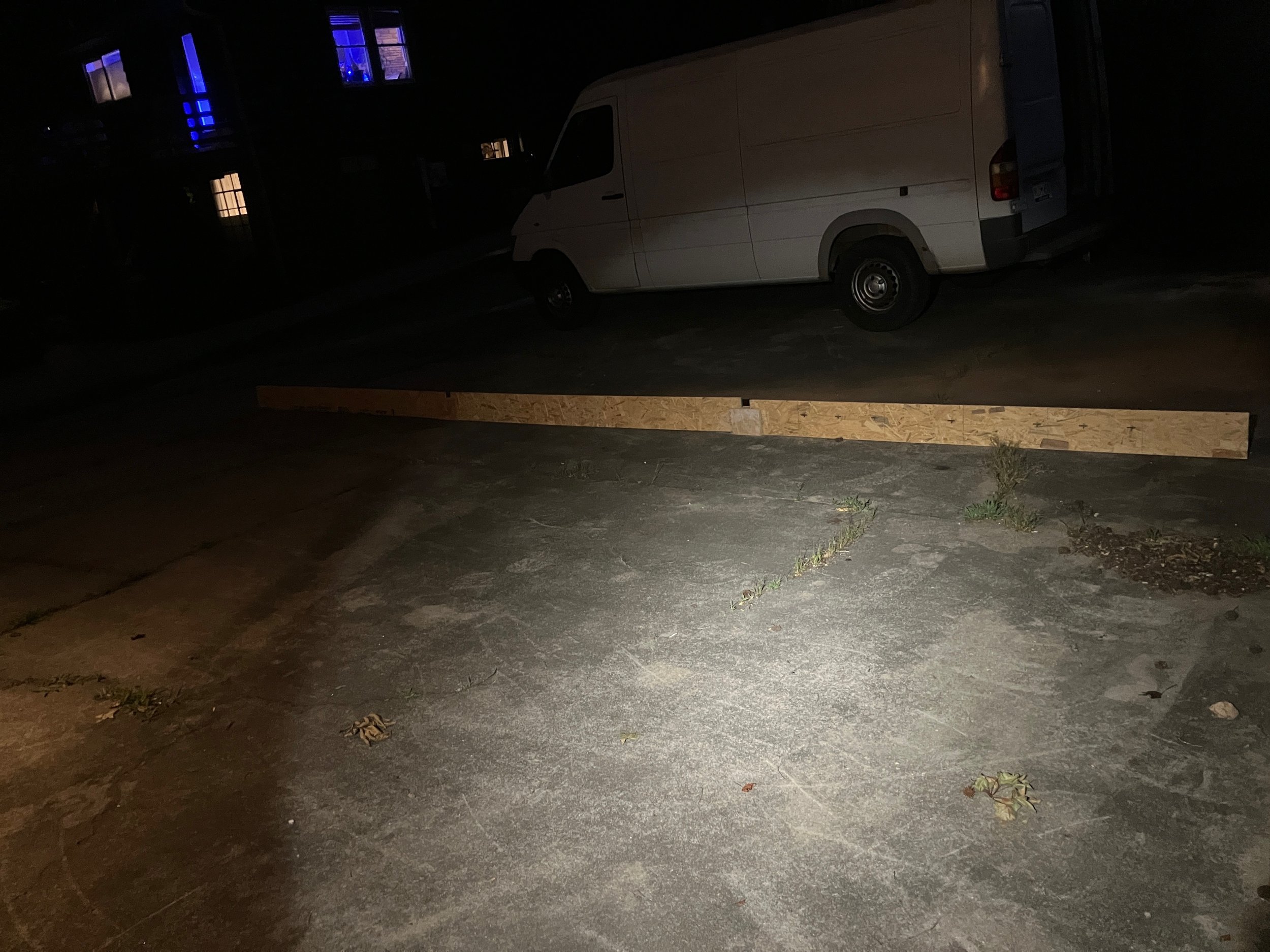
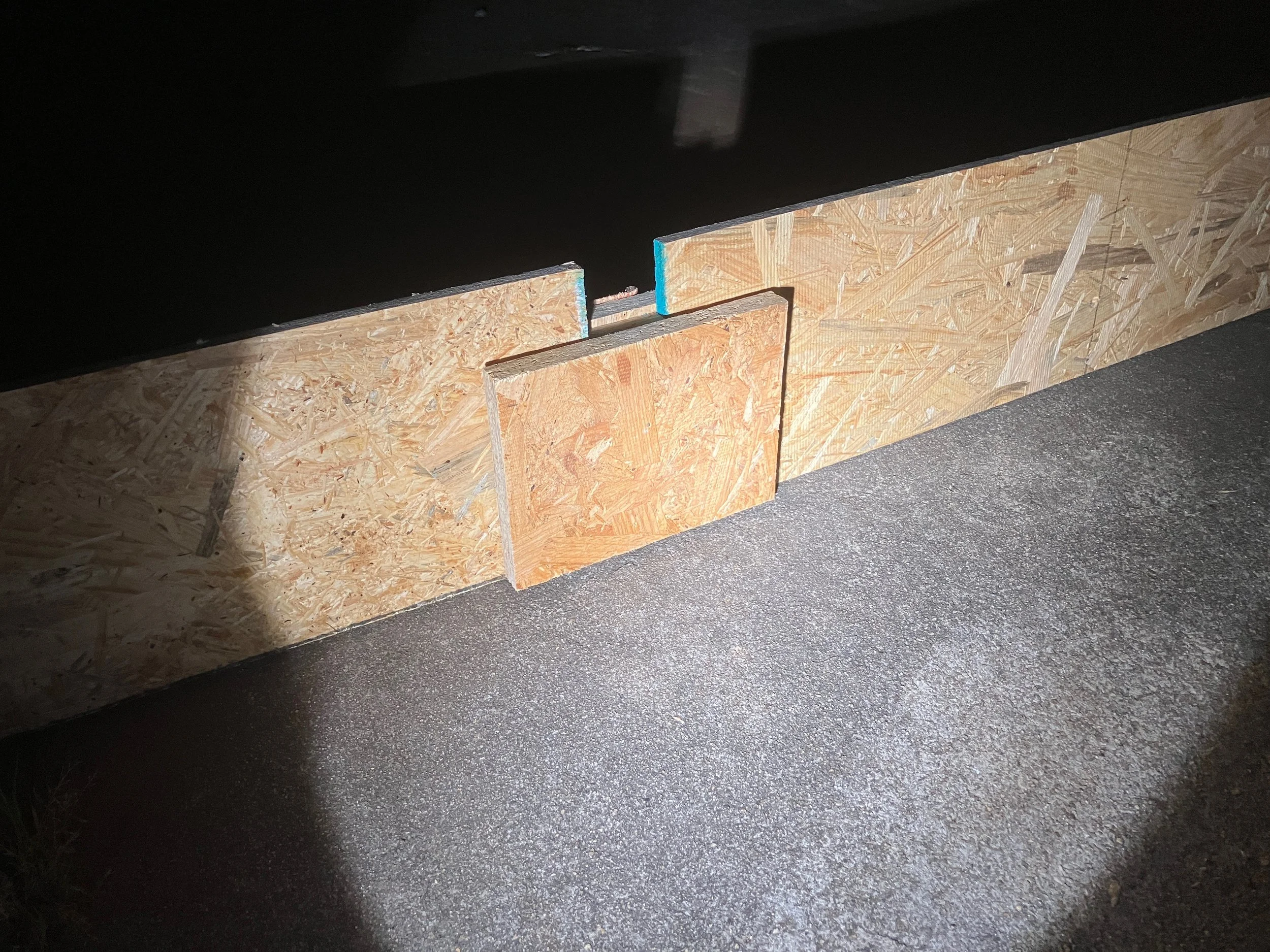
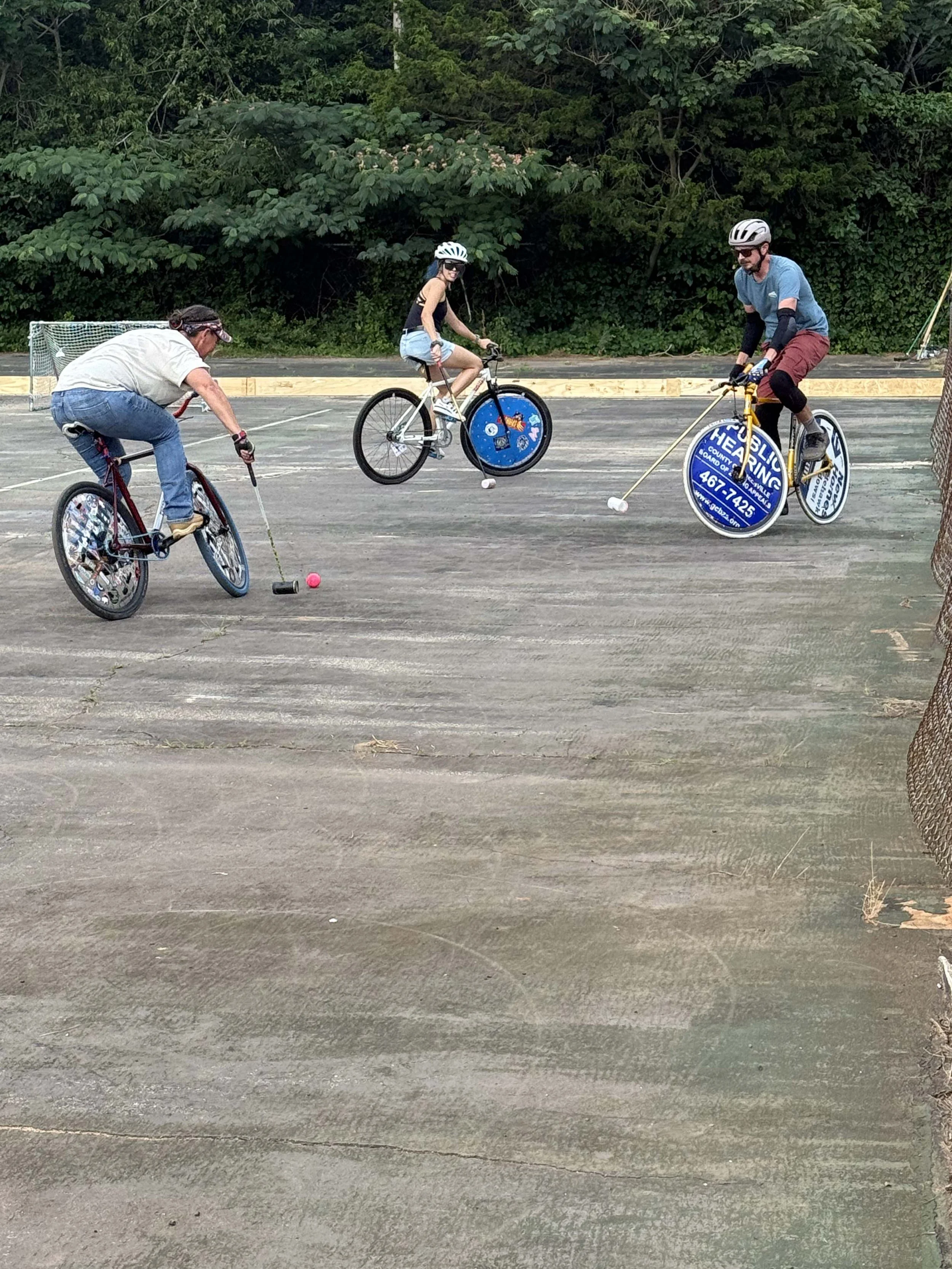
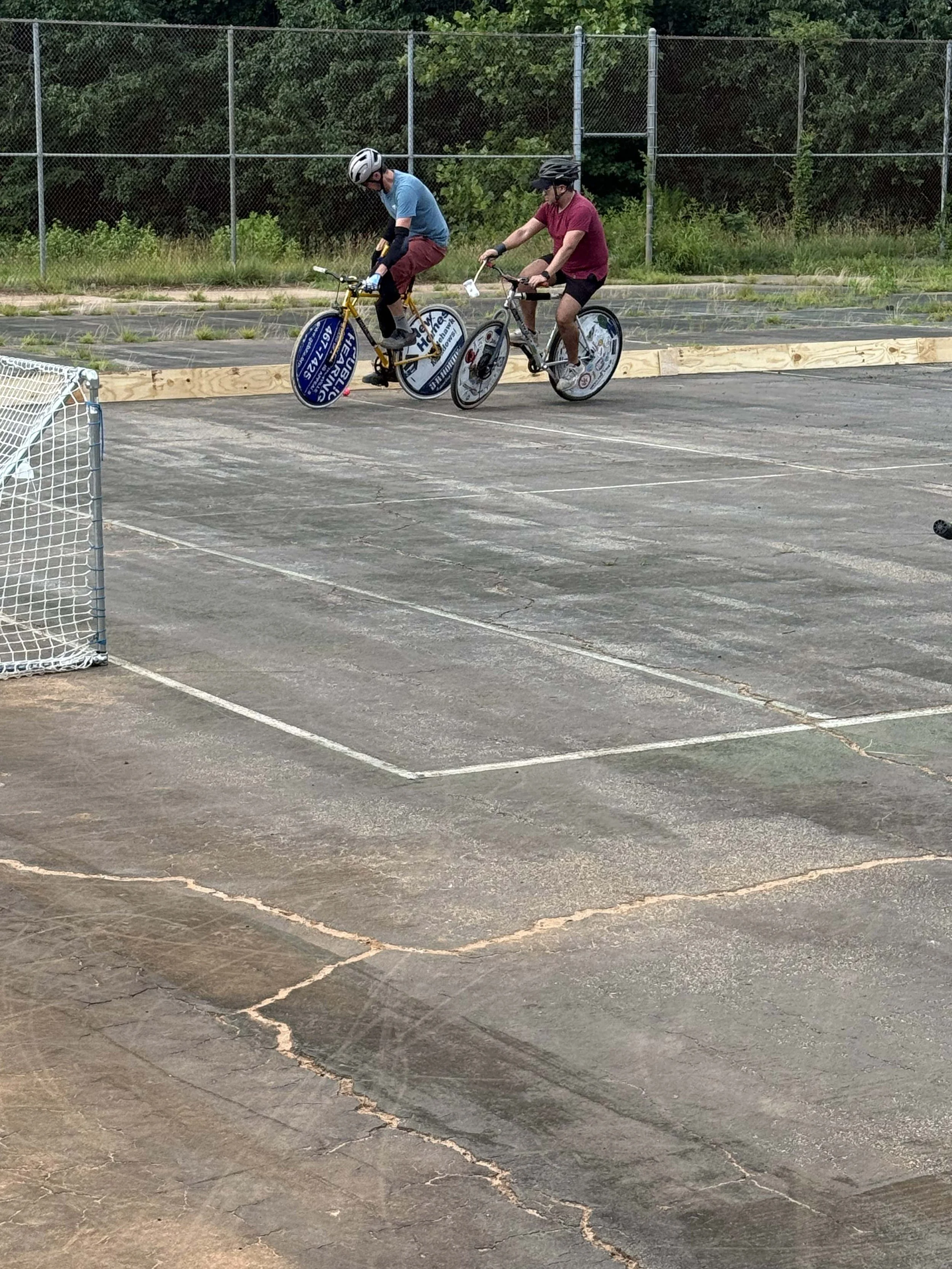
June 20th was our final push before hosting pickup, and we focused on defining the space itself. We cut 8-inch boards to outline the court. These boards give the game structure and help keep play contained.
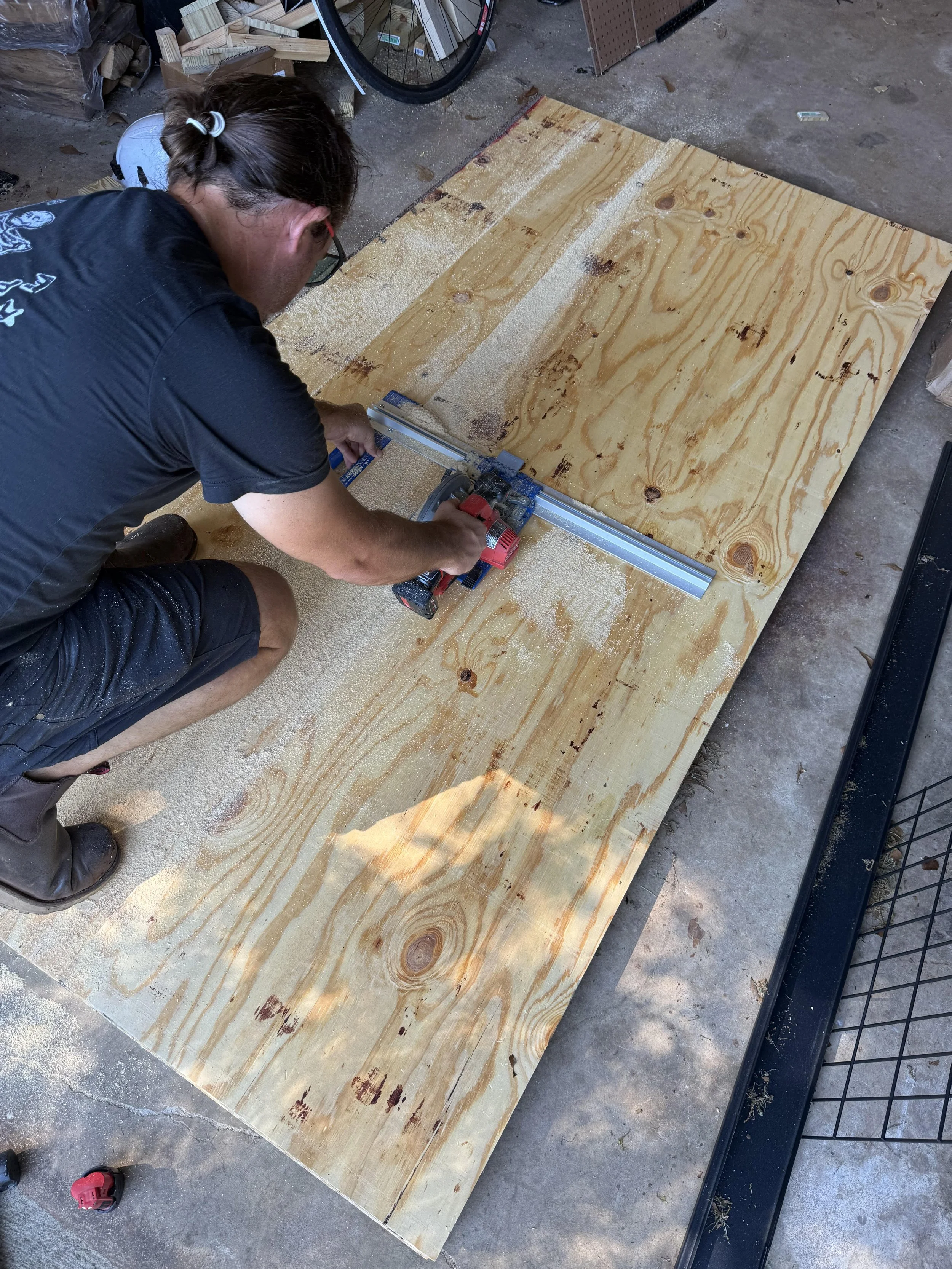
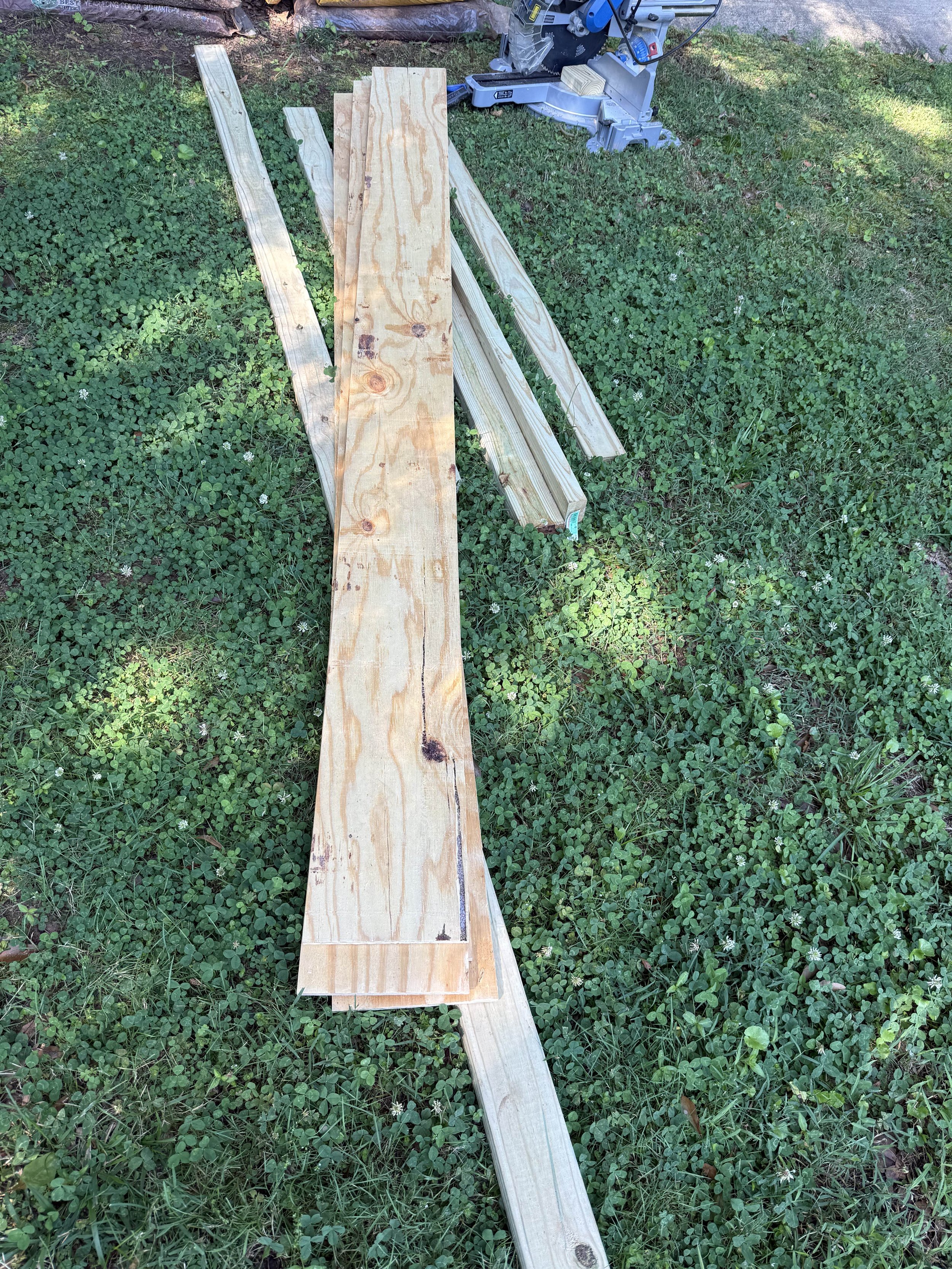
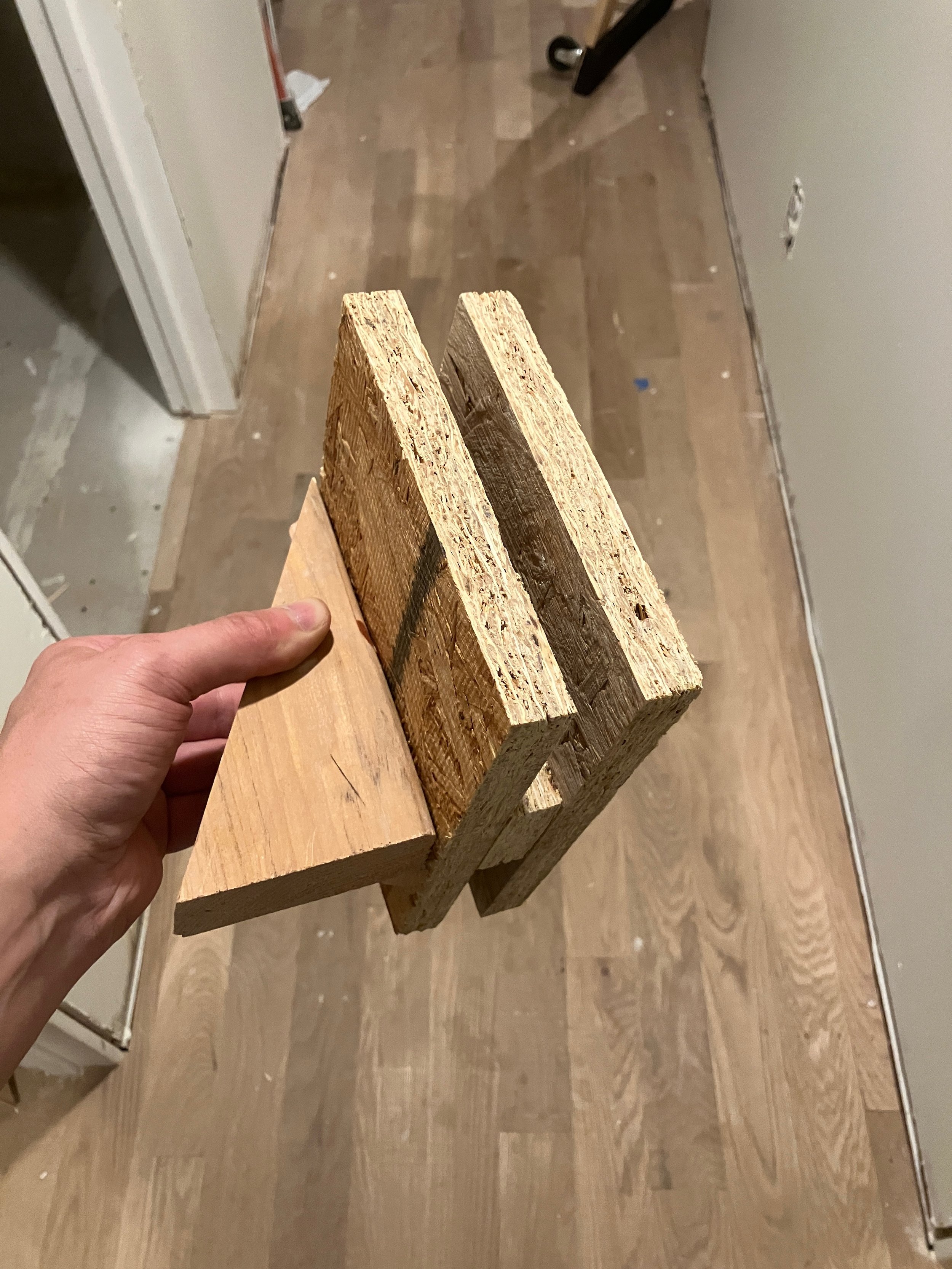
One of our newest members, Kevin, built roughly twenty board stands. These stands hold the boards upright and stable without permanent installation. It was careful, practical work that would make setup and teardown possible week after week.
June 22: Ready to Play
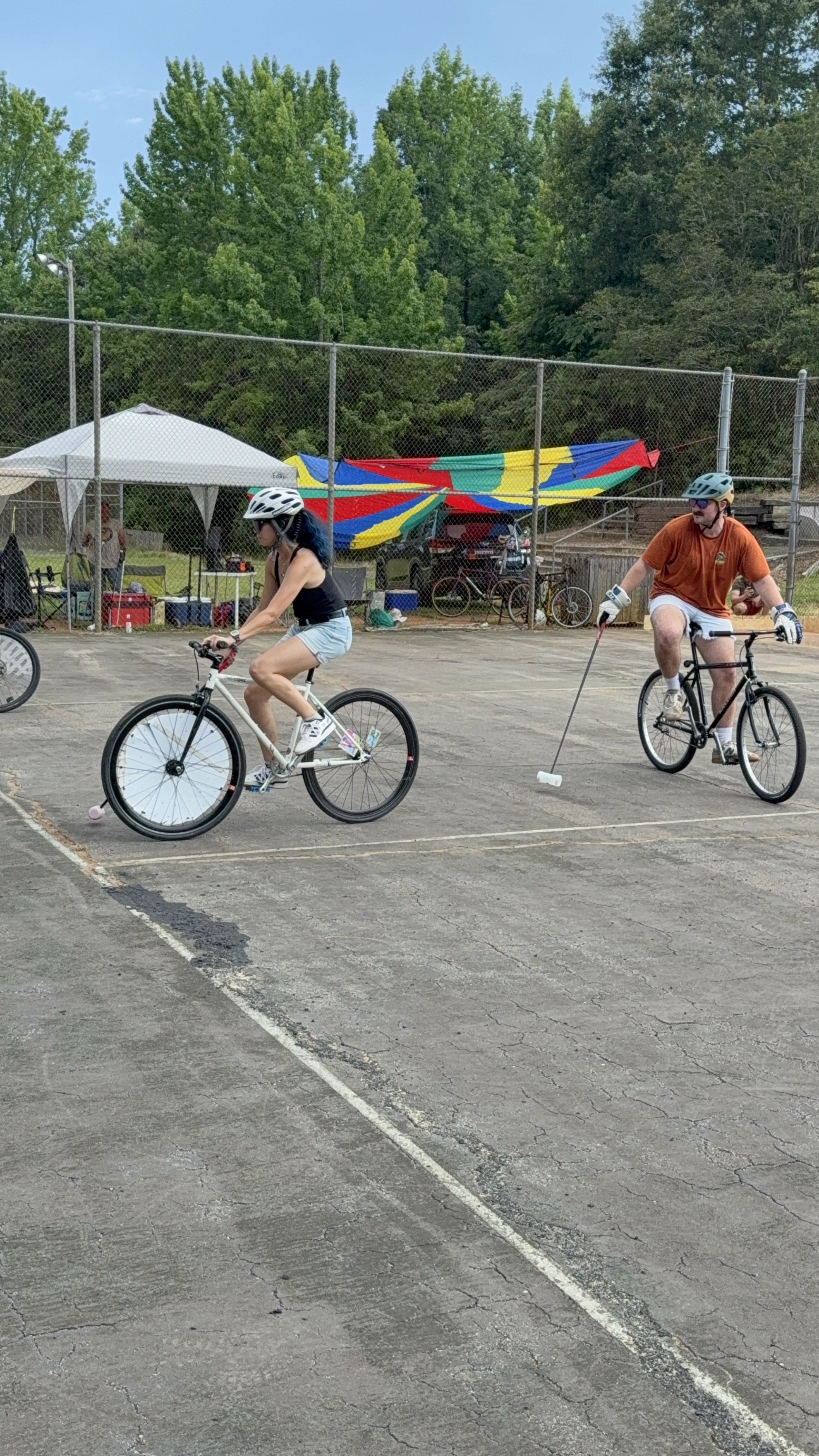
All of this work had a clear purpose. We wanted to be ready to host our first official pickup at Lakeside on June 22. And it paid off! The court looked like a place meant for bike polo.
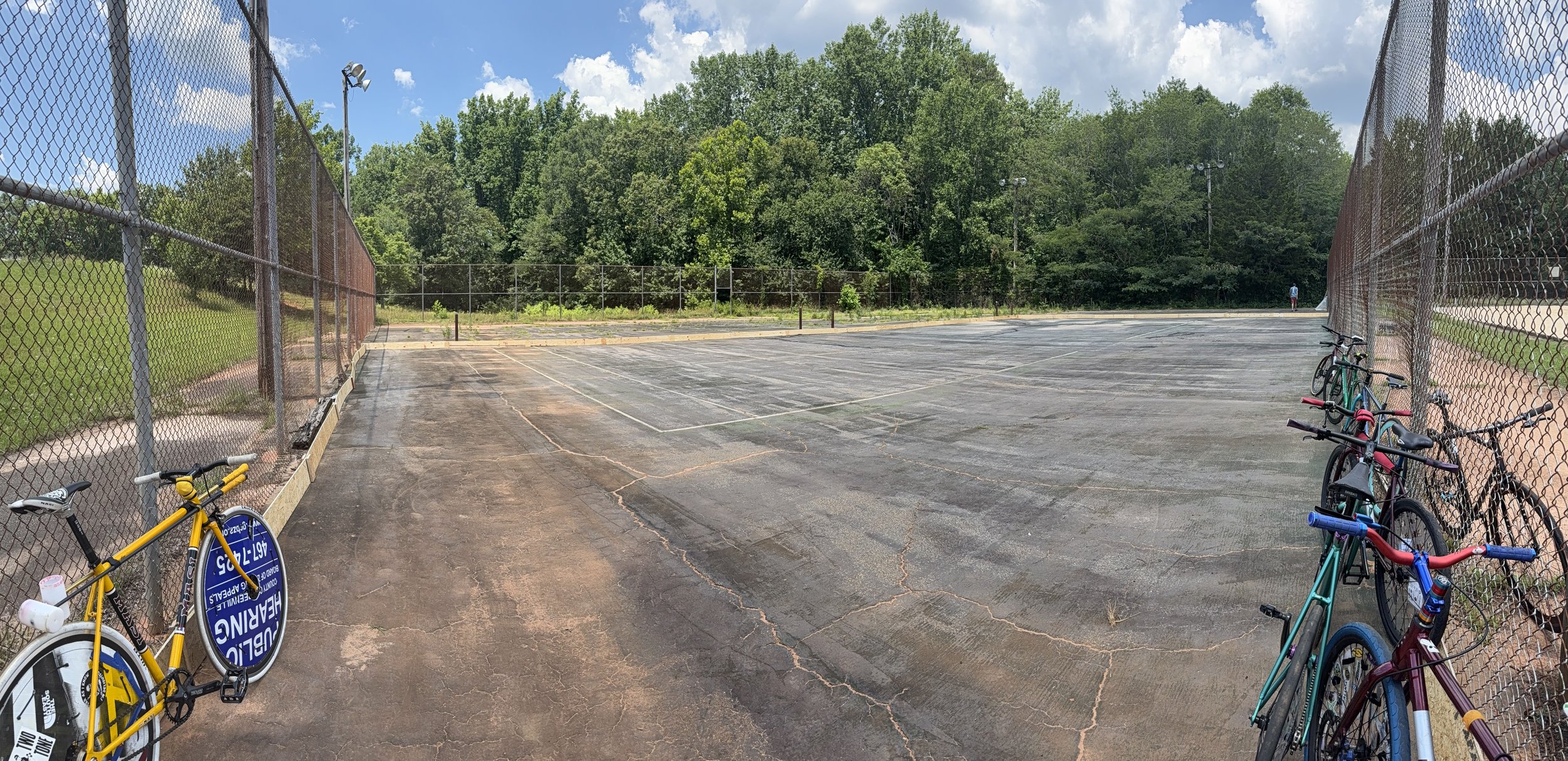
By then, the weeds were gone. Major cracks were filled. The court was defined. The space was safe, clear, and welcoming enough to invite people in. We had visitors from Columbia, SC, come up to play with us (read about how we introduced bike polo to Cola here).
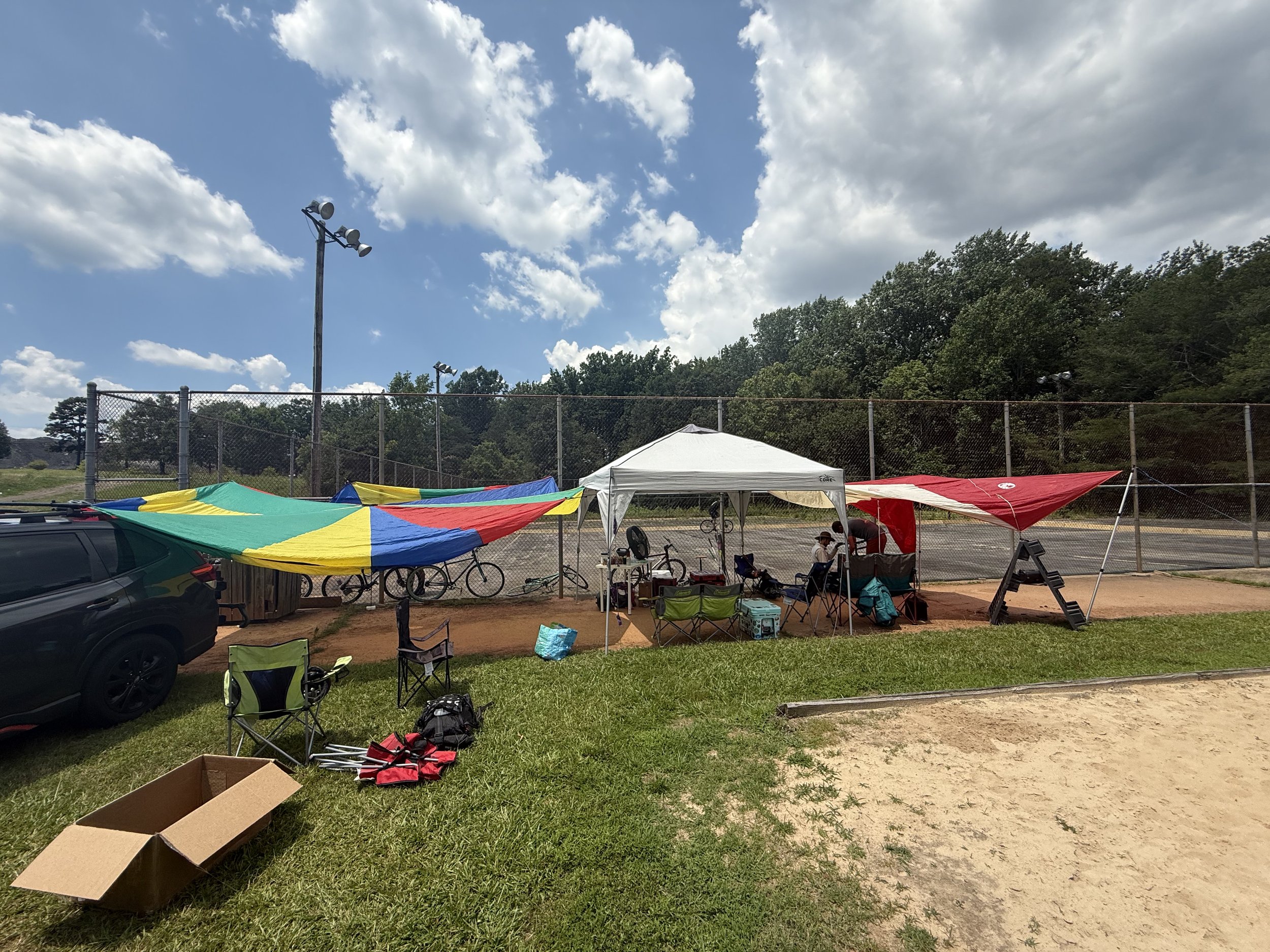
It was the hottest day of the summer, but we were too excited to wait. So, we set up a tent and brought a fan and a portable battery.
That’s what having a home court really means to us. Not just access, but responsibility. We want to show up for the space, take care of it, and leave it better than we found it.
Lakeside didn’t become a bike polo court because it was perfect. It became one because people were willing to do the work to make it playable and keep it that way.