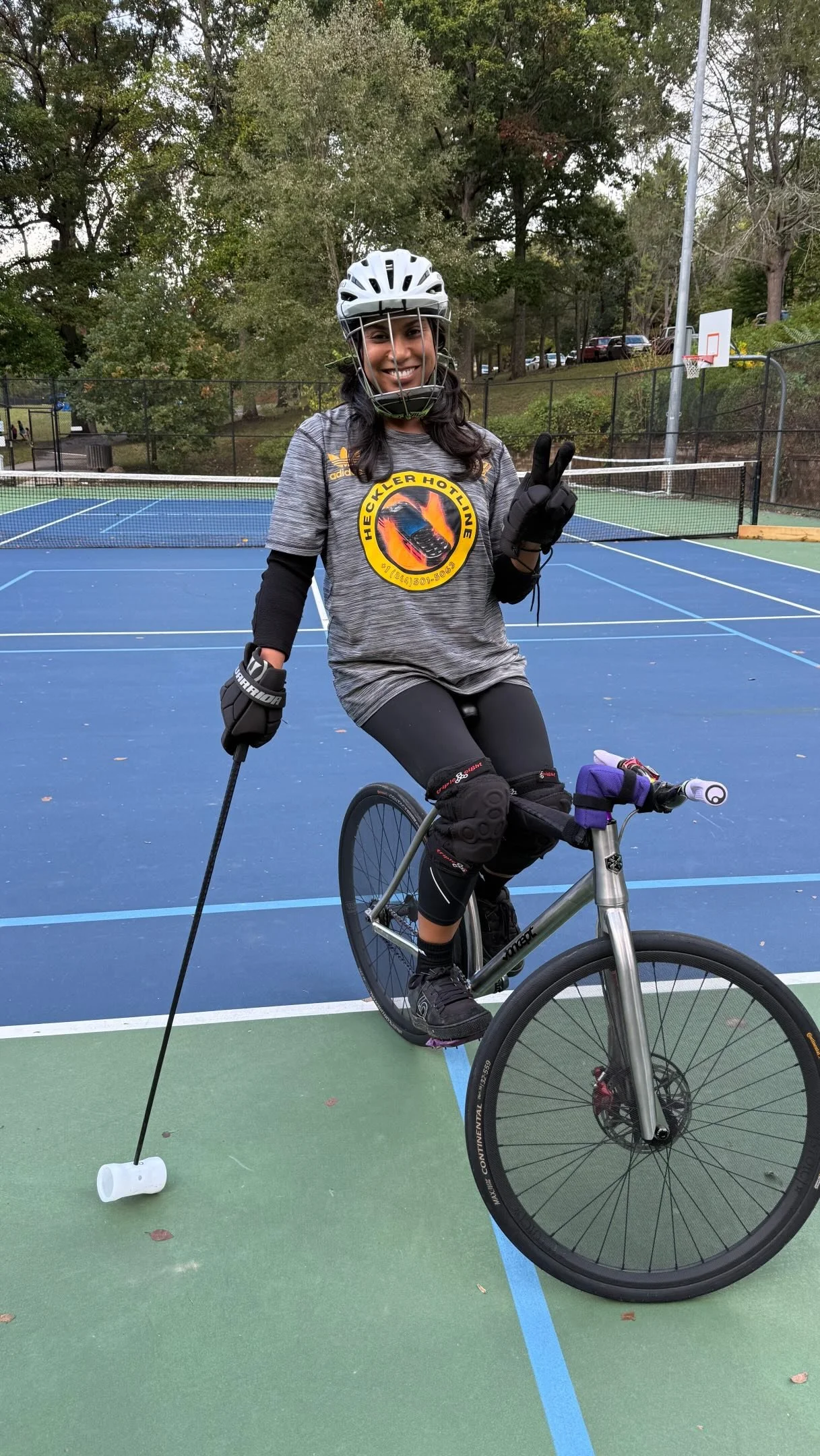
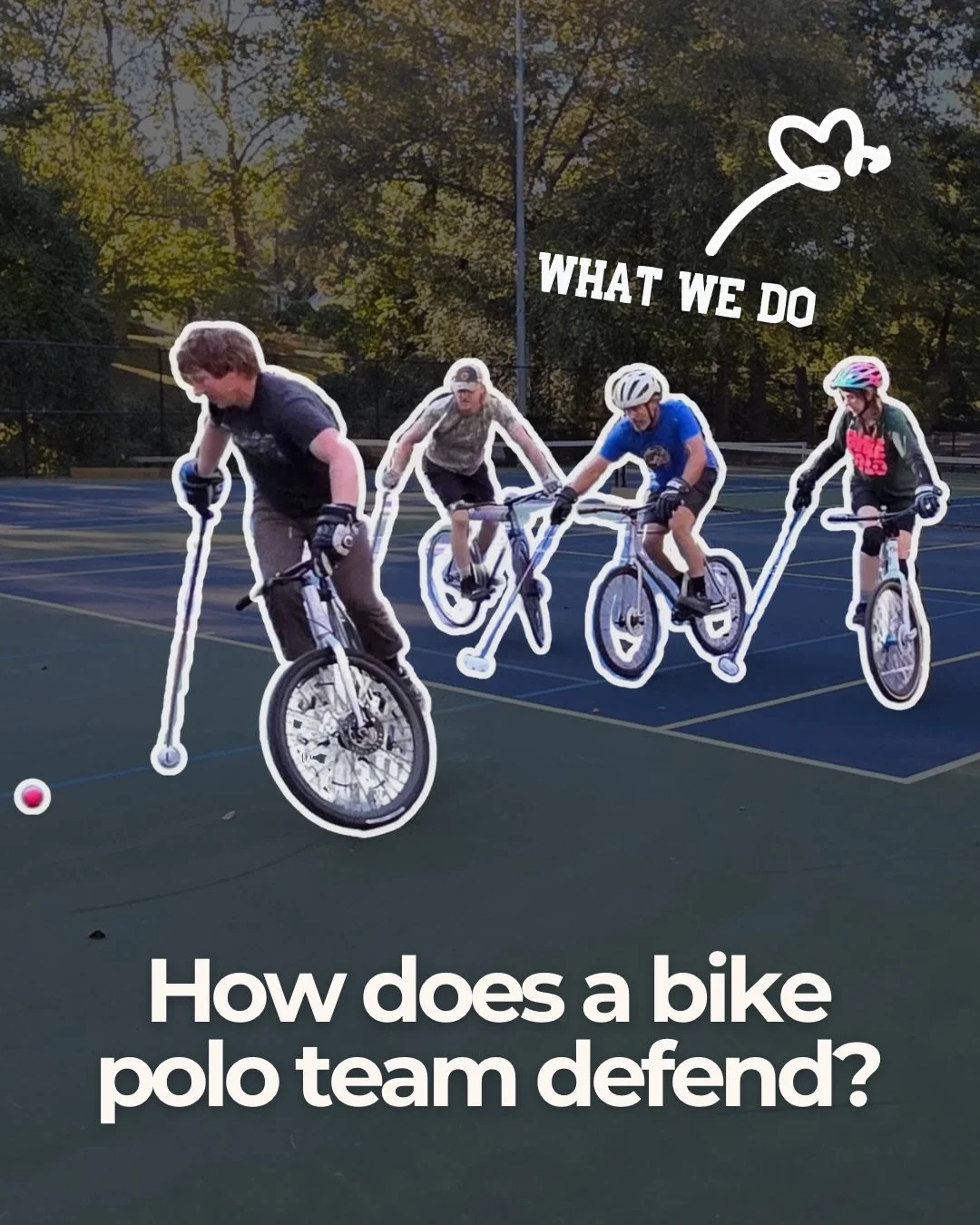
How GVL Plays: Strategy, Tactics, and Transitions
In our last post, we laid out GVL's 3-2-1 defense: a goalie (the 3), a second defender near the crease (the 2), and one player pressuring the ball carrier (the 1). This post steps back to the plan behind that setup, then covers what everyone does in the moments when the ball changes hands, and nobody is set up yet.
Strategy and tactics
People use these words interchangeably, and in casual conversation that's fine. On court, the difference is useful.
Strategy is the plan. It's how your team tries to win, and you decide it before the game or between points. "We're going to play defense first and wait for good shots" is a strategy.
Tactics are the moves. They're what you do in a specific moment to carry out the plan. Holding the inside line on the ball carrier is a tactic. So is passing back to your goalie when nothing is open.
An easy way to keep them straight:
Strategy answers "how are we trying to win?"
Tactics answer "what do I do right now?"
This matters because bike polo moves fast and nobody has time to talk things over mid-point. With three players on a team, each person is making their own split-second decisions. When everyone already knows the plan, those decisions get a lot easier, and they tend to line up with what your teammates are doing.
Our strategy
GVL plays a fairly conservative, defense-focused game. When we don't have the ball, we set up a goalie and a second defender, with one player pressuring the ball carrier.
The reasoning is pretty simple. Goals are hard to come by, and most games are low-scoring. A one-on-one against a set goalie is roughly a coin flip. Adding a second defender between the ball and the goal cuts down the other team's good chances and gives us more opportunities to force a turnover. If we give up fewer goals, we don't need to score many to win.
None of this is new. It's basic sports strategy, and plenty of clubs play some version of it. We're writing it down because a shared plan makes pickup games smoother and gives newer players something concrete to work on.
Our tactics
A few habits support that plan:
Pressure from inside the play. The player on the ball stays between the carrier and the goal.
Sending the ball home when there's no good look. Instead of forcing a low-percentage shot, we take or pass the ball back to our own half and reset.
Pulling the goalie as a pass option. When we have the ball, the goalie can come out and give the carrier another option.
Each one exists to keep the ball away from our goal or to wait for a better chance. That's what we mean when we say tactics support the plan.
Transitions
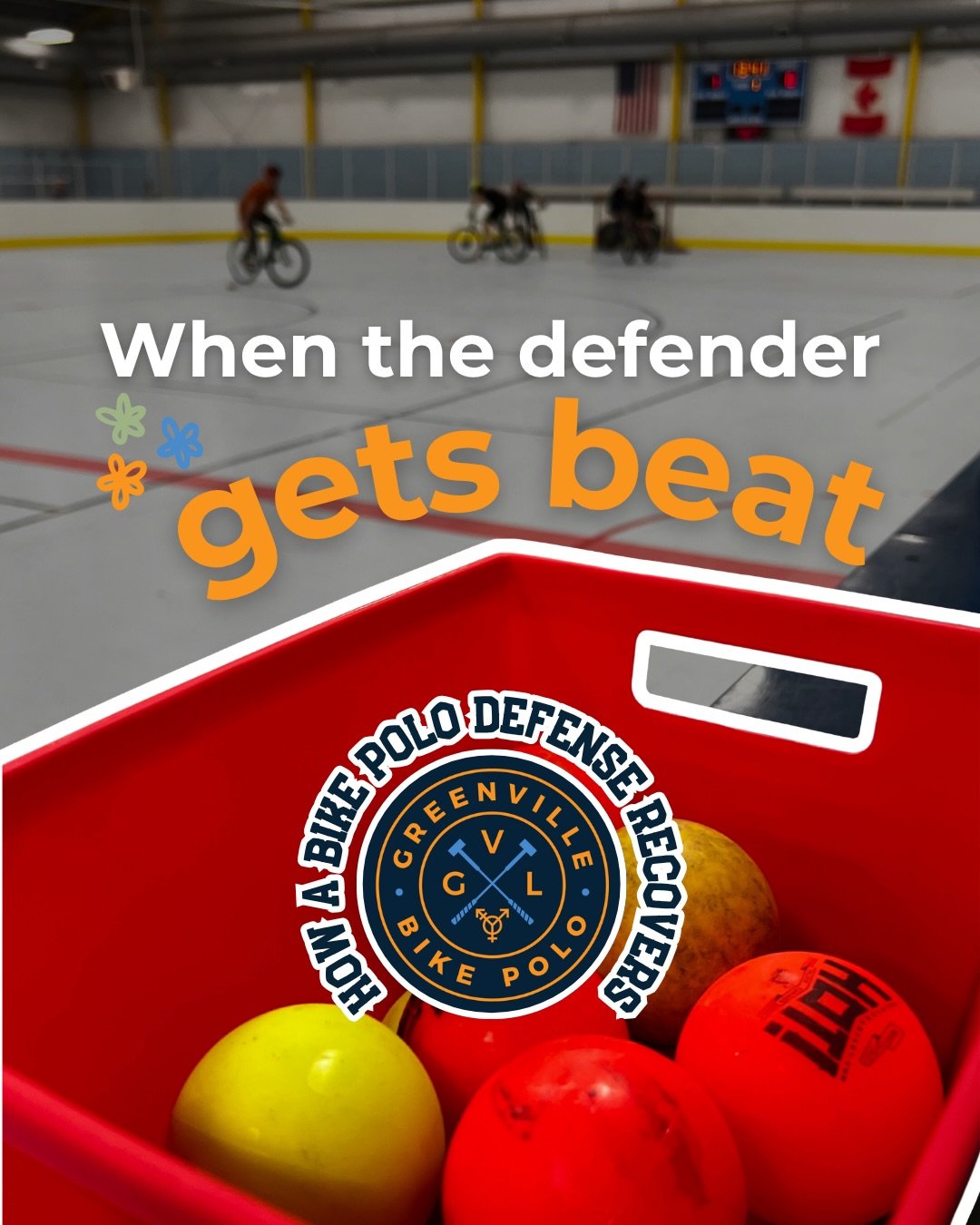
The ball changes hands constantly in polo. Every time, both teams have a few seconds where nobody is quite set up. Those moments are where a lot of goals come from, and they're where knowing the plan pays off most. If everyone already knows their job, the team can get organized while the other team is still figuring it out.
See it coming
A turnover is any time the ball changes hands, whether from a steal, an interception, a missed shot, or a bad pass. Turnovers rarely come out of nowhere. Usually there's a sign a second or two before: a player gets stuck in a corner, someone makes a risky pass, someone is lining up a shot.
If you can read it a second early, you're ready for whichever way the ball goes. That's court awareness: knowing where your teammates and opponents are, and which direction they're facing. It takes time to build, and it's one of the most useful skills in the game. A good habit to practice is glancing around the court whenever the ball is away from you.
Offense to defense
Your team just lost the ball
When your team loses the ball, everyone has a job, and your job depends on where you are.
If you're already between the ball and your goal, you pressure. Stay on the inside, slow down the opposition, and make the carrier shoot or pass before they want to. You don't have to win the ball back. You just have to slow it down so your teammates can get into position. A couple of seconds of pressure is usually enough for your team to reset.
If you're behind the play, don't chase. If the ball is between you and your goal, ride back and get between the ball and your goal. Go around the outside of the play so you don't get tangled up with your teammate who's pressuring. Getting in front of the play gives your team another defender. Chasing from behind usually doesn't.
Get someone in goal. Whoever can get in easiest gets in goal. That might not be the person closest. It might be the person already facing the right direction. Take the shortest line to the goal, even if it means turning your back on the ball for a moment. If you can do so safely, keep your head turned to watch the play.
Don't wait to see who it's going to be. Two players hesitating is how open-net goals happen. This matters most when your team pulled the goalie to attack, since the net is empty the moment the ball turns over.
Defense to offense
Your team just won the ball
When your team wins the ball back, the other team is scrambling to set up. This is a good moment, and a short one.
Look up early. Look up before you reach the ball, so you know where your teammates and opponents are heading. That way you can get the ball to them before the other team resets. The first pass after a turnover does the most damage, so keep it quick and simple.
Get open. If you don't have the ball, your job is to give the carrier somewhere to go. Move away from defenders and away from the carrier. One teammate up and one back gives the carrier options in both directions. If your teammate seems stuck with the ball, keep moving.
Send it home. If there's no good look, draw out the defense by using the whole court and sending or carrying the ball home. For us, "home" means your own half, or a pass to your goalie who can collect it without pressure. You keep the ball, and your team gets time to set up a better shot on goal.
What to say
Almost every transition breakdown traces back to two players not knowing what the other is doing. You don't need a special vocabulary. Short, plain calls work. Here are some you might here us say:
“Home” or "Reset": Pass the ball home or come home with the ball
"Come home!": Get back on defense, or someone's coming up behind you.
"I'm in" or "I've got back": I'm goaltending.
"I'm out": I'm leaving goal. Someone needs to drop back.
"I'm with" or "Across": I'm across the court from you in the same line.
"Down the wall" or "Down the line" or "Same wall": I am on the same side of the court as you
“Leave it” or "I've got the ball" or “Mine”: I've got the ball; don't go for it.
"Behind net": Pass or carry the ball behind the net
"One on" or “[Player name] on”: An opponent is about to reach you. Move the ball.
If talking during play feels awkward at first, that's normal. Start with one call per point and build from there.
Next Up
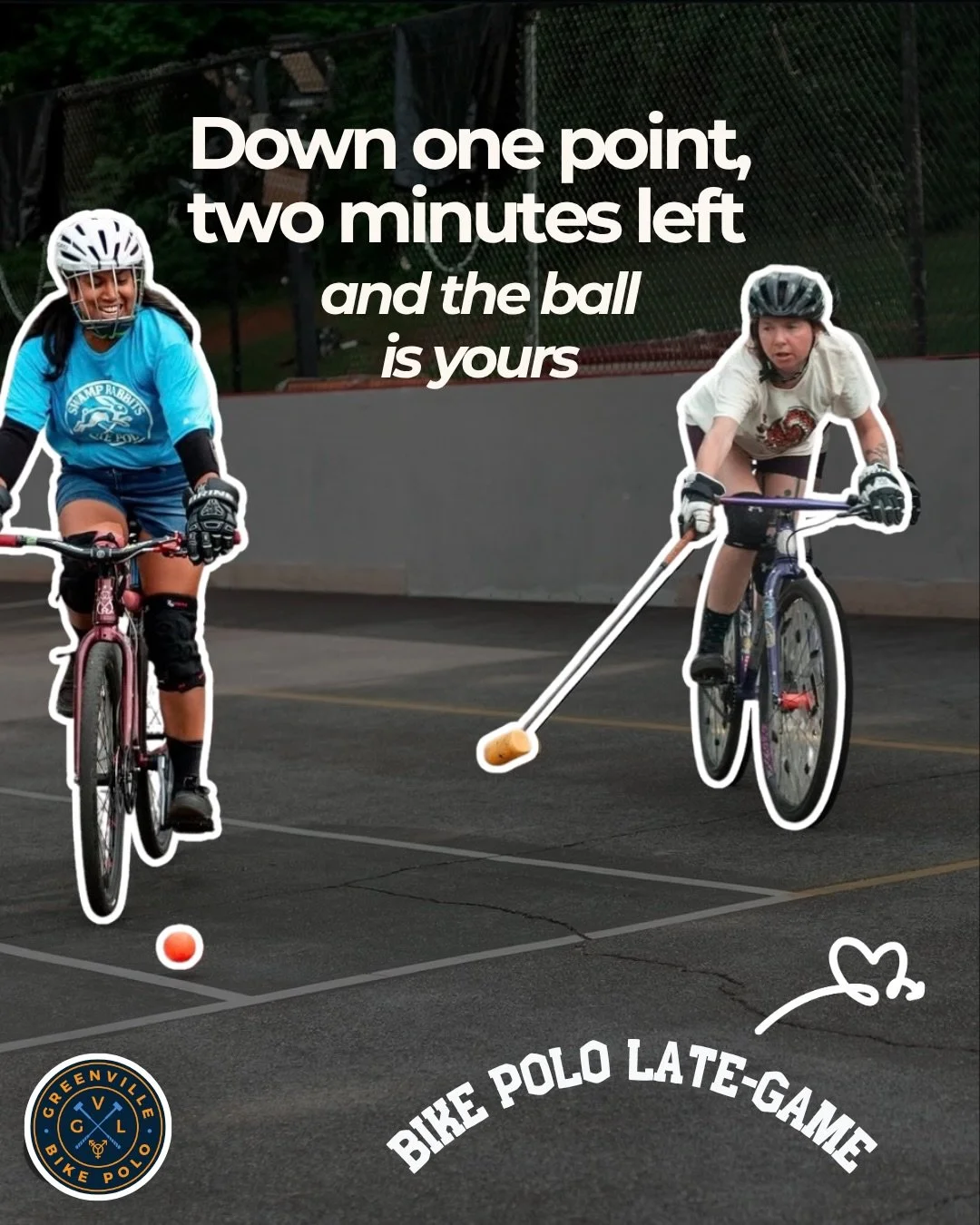
Our last post in this series puts everything together with four late-game scenarios: up or down by one, with or without the ball, and two minutes on the clock. We'll go through what GVL recommends in each one and why.
Come play with us!
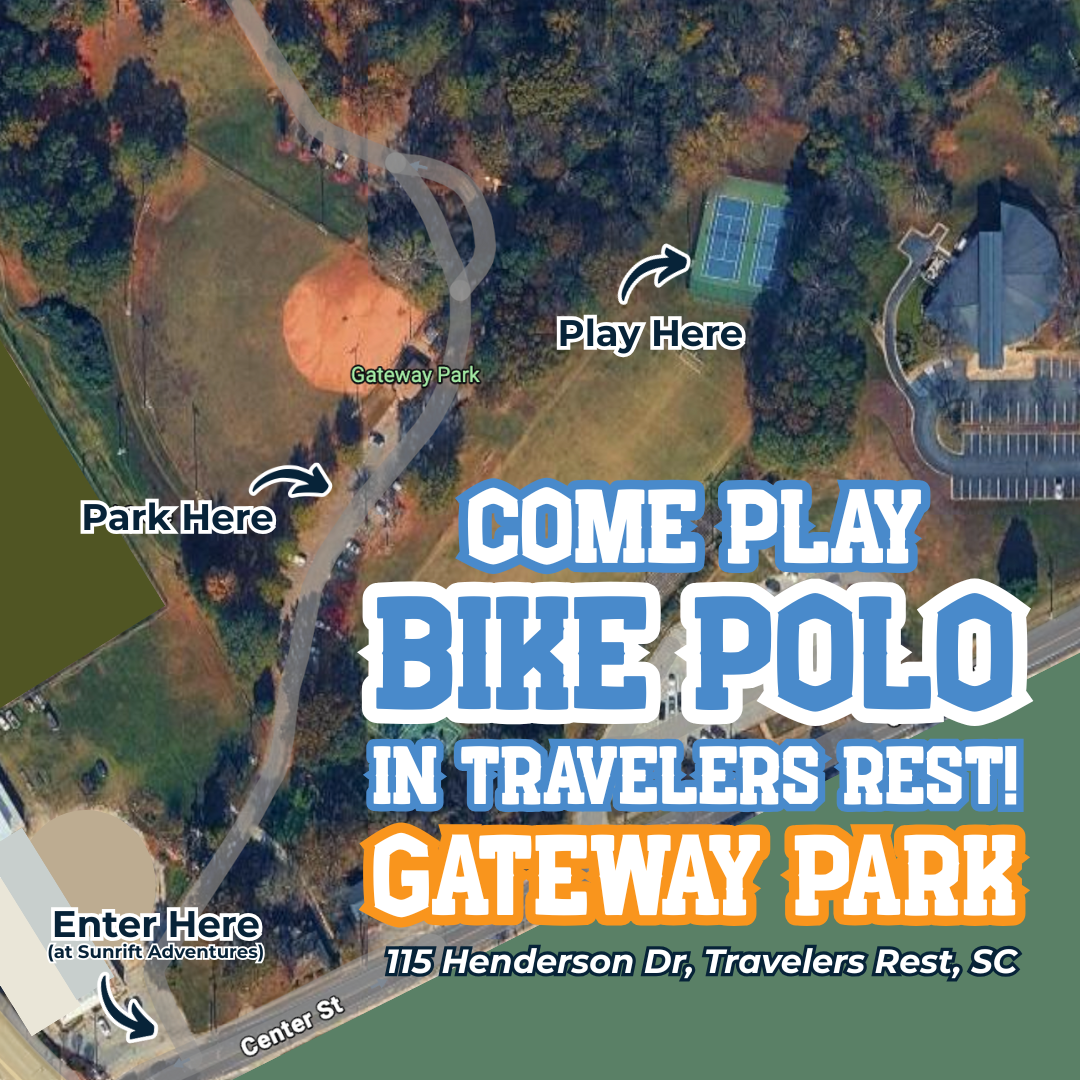
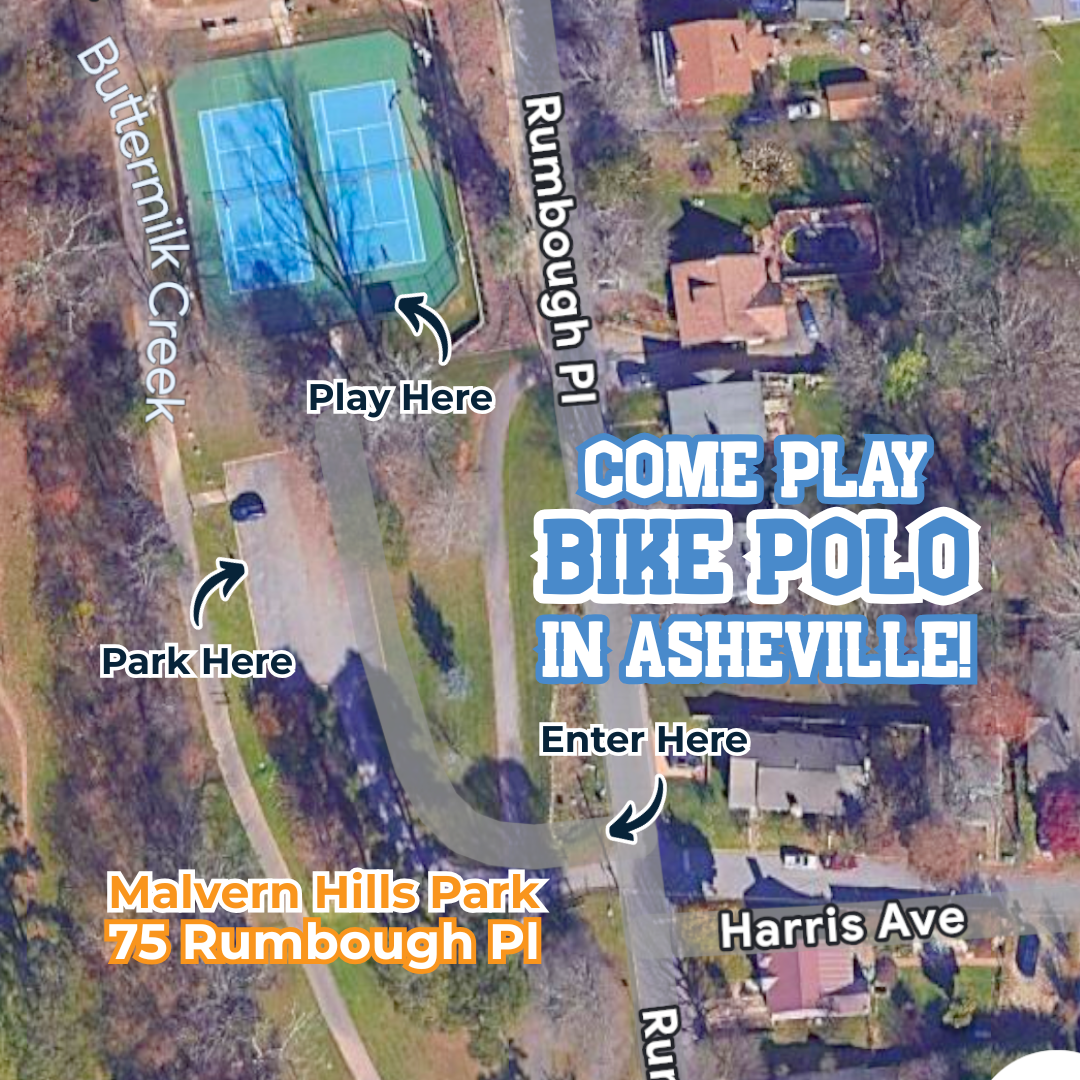
The best way to learn any of this is to ride it. We play Tuesday evenings and Saturday afternoons at Gateway Park in Travelers Rest, and Sunday afternoons at Malvern Hills Park with AVL Bike Polo.


Loaner gear is available, and nobody expects you to know where to stand on your first day. Follow @GVLBikePolo on Instagram for updates.