Beginner Bike Polo Gear: What You Actually Need to Get Started
Watching players roll up with custom frames and homemade mallets can make bike polo look like a sport with a steep barrier to entry. It isn’t. Most of us started on borrowed bikes and borrowed mallets, and plenty of people still play that way.
If you just want to know what to bring to your first pickup: a helmet, closed-toe shoes, and a willingness to learn. We’ll lend you a bike and mallet. It helps if you let us know you’re coming, but it's not necessary. Everything below is for when you’re ready to start building your own setup.
🥽 Helmets
Any bike helmet is fine. Your head is the one thing you really need to protect, so this is the only piece of gear we’ll insist on. A skate-style helmet gives you more coverage on the back of your head.
Do I need a face cage? You don’t need one, but many players wear one. Mallets and balls come up higher than intended, and collisions happen. If you want that extra protection, look at hurling helmets. They’re light, they’re built for contact, and the cage is easier to see through than a hockey cage, which makes the adjustment easier.
A few options, roughly $40–80:
Knapper AK5: made for ball hockey, about half the weight of an ice hockey helmet, and well ventilated
If you’re ordering from overseas, read the return policy before you buy. Shipping a helmet back internationally can cost about as much as the helmet.
Adding a cage to your bike helmet. Many players attach a hockey cage to a regular bike or skate helmet, usually with hockey buckles and zip ties, Velcro, or straps. Boston Bike Polo put together a step-by-step tutorial on Poloverse if you want to try it. If you go this route, start with a helmet that’s dual-certified for biking and skating. Those are built to take more than one hit, which matters in a sport where you’ll fall more than once.
Bike helmets and hockey cages weren't made to go together, so check your setup often and replace anything that cracks or loosens.
🧤 Gloves
Gloves aren’t required, but they’ll save your hands from scrapes, jammed fingers, and the occasional teammate’s mallet. Nobody makes polo-specific gloves, so players borrow from other sports.
Mechanic gloves (like Mechanix) are the lightest option and a cheap way to start. They’ll handle scrapes but don’t offer much padding.
Lacrosse gloves (like the Brine King) are the most common pick. They’re padded without being as bulky or hot as hockey gloves, and the thumb bends, which helps you handle your mallet and shoot as you get more comfortable.
Hockey gloves (like CCM) have more padding and a stiffer thumb. Some players like the extra protection; others find them hard to handle a mallet in.
Gloves get expensive new. SidelineSwap has plenty of used lacrosse and hockey gloves at much better prices.
🦵 Knee and Elbow Pads
You may not think you need pads until the first time you go down. We recommend starting out fully padded while you get a feel for the bike and the court. If you start playing tournaments, keep them on.
Soft knee pads are light, easy to get on and off, and washable. They’re good for light to medium falls.
Triple Eight Exoskin skate pads
Decathlon dance knee pads
G-Form Pro Rugged
Fox Racing Launch Pro
Knee and shin guards cover more of your leg, which helps when you meet a pedal or a stray mallet.
IXS Cleaver
Demon D3O Hyper
Elbow pads come in two main styles. Mountain bike elbow guards (G-Form Pro-X3, Fox Enduro D3O) give you a hard-wearing pad. Basketball-style padded sleeves are lower profile and more comfortable to play in for hours.
👟 Shoes
You can play polo in any closed-toe shoe. If you want something that holds up better, flat-pedal mountain bike shoes are comfortable, grip the pedals well, and can take a polo ball to the foot. Five Ten and Crankbrothers are both popular.
If you decide to clip in, you’ll need cycling shoes that match your pedals. Some players also convert their favorite sneakers to take cleats.
🚲 Your Bike
If you’re new to bikes in general, the vocabulary takes a minute. Here’s a quick guide to the parts that matter for polo.
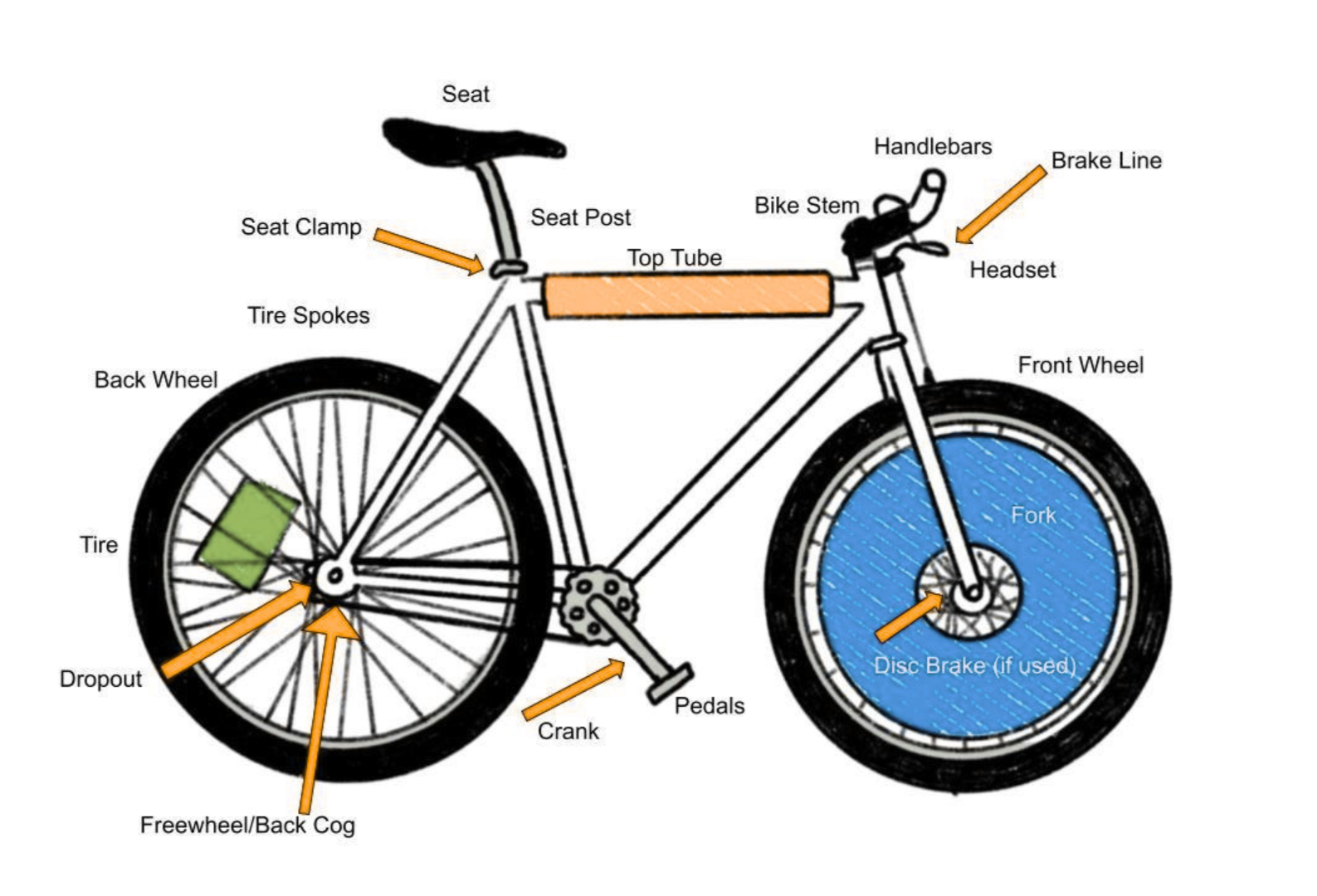
Frame shape. Polo bikes usually have a short back end, so the rear wheel sits tucked up close under the seat. That keeps your wheels underneath you and makes tight turns easier. You’ll hear this called a “track style” frame. Early hardcourt polo was mostly played on fixed-gear bikes, but you’ll see far fewer of them on the court now.
Brakes. Polo bikes are single-speed, and the rules require at least one hand brake. The lever goes on your non-dominant side so your mallet hand stays free. Disc brakes are getting more common, and some players still prefer rim brakes. A dual-pull lever runs both front and rear brakes from that one lever.
Dropouts. Horizontal dropouts are preferred because they make it easy to adjust chain tension on a single-speed. Vertical dropouts work too, usually with a chain tensioner.
Frame material. Most polo frames are steel. Aluminum, carbon, and titanium show up too.
Clipless or flats. Either is allowed. Unless you already ride clipped in comfortably, start on flats and move to clips once you’re steady on the bike. (Or skip that advice if you’re fearless.)
Handlebars. You’ll see everything from straight bars to risers to very short bars.
Cranks, bars, stem angle, seat height, and seat tilt are all adjustable, so tune as you go.
What the NAH rules say about your bike
These matter most at tournaments, but they’re good habits for pickup too:
At least one hand-controlled brake
Bar ends plugged or capped, and each side no more than 13.75" (350mm) from the center of the stem
No racks, fenders, bottle cages, saddlebags, or anything else that could block the ball. Wheel covers and disc guards are the exceptions.
No sharp edges, loose screws, or exposed parts. That includes exposed cogs and chainrings, unprotected disc rotors, and axles that stick out. If you can cover something securely and the ref approves it, you’re good.
Section 2 of the NAH Ruleset »
🔨 Mallets
Every player eventually builds their own mallet. Borrow one for your first few sessions while you figure out what you like.
A mallet has four parts:
Grip: a golf grip or grip tape
Shaft: metal or carbon fiber (an old ski pole works for a first build)
Connector: holds the head on the shaft
Head: plastic, usually HDPE
Check compatibility before you buy
This is the part that trips people up. Not every connector fits every shaft, so match them before you order:
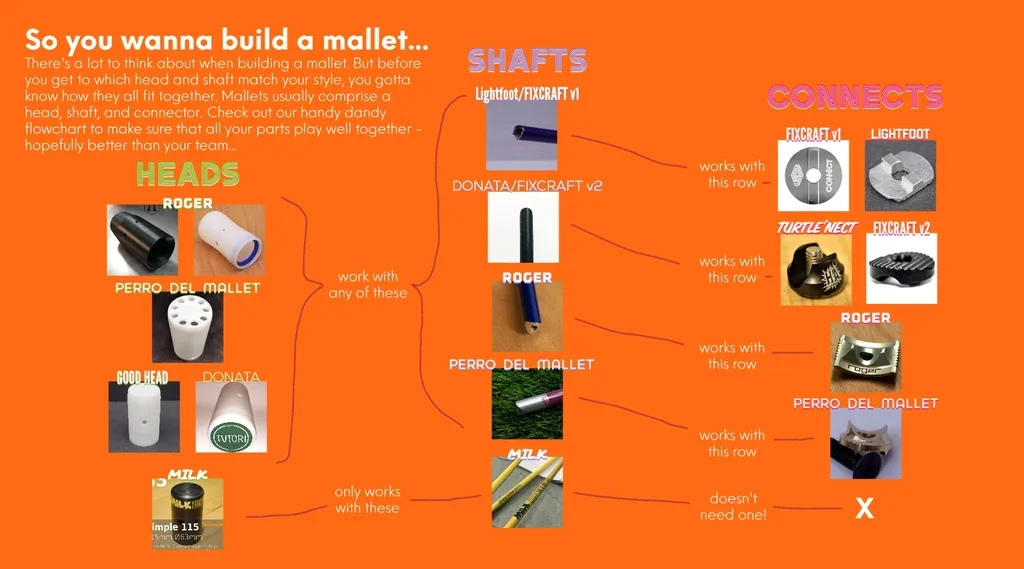
Heads from Roger, Perro del Mallet, Good Head, and Donata work with any of the first four shafts. Milk heads work only with Milk shafts.
Sizing
Shafts come long, and you cut them down with a pipe cutter. A good starting point is a mallet that reaches the top of your hip, but it’s personal preference. Cut a little at a time. You can always take more off, but you can’t put it back.
Shaft material, length, and head all add to the weight. If your mallet feels heavy, look for lighter shafts and heads.
Mallet heads
Heads come in different shapes. Some have an hourglass profile, and some taper toward the scoop end. Try out teammates’ mallets to see what you like before you buy. You’ll also see homemade heads on the court, sometimes with holes drilled through them. That makes them lighter, but they lose their shape faster.
Heads wear down on the side that hits the court surface. Since they’re round, you can rotate the head every so often to spread out the wear and make it last longer.
What the NAH rules say about mallets
Shaft is metal or carbon fiber, with the grip end plugged or sealed
Shaft doesn’t poke through the bottom of the head
Head is plastic and securely attached
Head is no longer than 6.5" (165mm)
Holes in the head are no wider than 2.3" (58.5mm) across, and the head’s outside diameter is no more than 2.559" (65mm)
Refs can pull any mallet they think is dangerous, like one that splinters, cracks, or has sharp edges
Section 2 of the NAH Ruleset »
✨ Extras
Disc guards. If you run a disc brake, you need a guard over the rotor. It protects you and other players and keeps your rotor from bending.
Wheel covers. Wheel covers keep the ball and mallets out of your spokes.
Black Star Bags, a small shop in Portland, makes top tube pads, guards, and more in whatever color you want.
🛍️ What to Bring to Practice
Water
Helmet and gloves
Mallet, if you have one
Bike multitool
Spare tube or patch kit
Willingness to learn. Being coachable and kind on the court counts for more than anything in your bag.
🧠 Gear Myths
“I need a custom bike to play.” You don’t. Most of us started on loaners.
“I can’t play without full pads.” Pads help build confidence, and we recommend them while you’re learning. But most early falls come from getting used to balance and bike handling, and those get better with time on the court.
“I have to buy everything at once.” Build your setup as you go. After a few weeks of playing, you’ll know what you want.
💬 Getting Started
At Greenville Bike Polo, we keep loaner bikes and mallets around, and someone will always help you get set up. Bring a helmet and show up.
If you’ve been waiting until you have the right gear, you already have enough. Come play!